The milk filter (duplex filter) is positioned between the raw milk reception tank and the pasteurizer in a yogurt production line. It removes physical contaminants—animal hair, feed particles, dust, bedding materials—from raw milk before further processing. Shuliy has manufactured and installed over 200 duplex filter units across dairy facilities in Southeast Asia, the Middle East, and Africa.
Dual-Filter Design: Continuous operation | SUS 304 Construction | 100-400 Mesh | 0.3 MPa Rated | Easy Maintenance
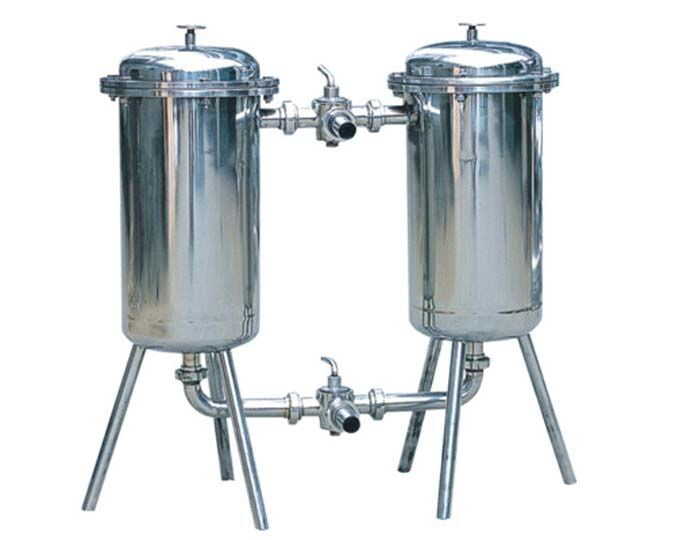
Duplex Filter vs Single Filter
The duplex filter consists of two parallel filtration cylinders connected by three-way ball valves at the inlet and outlet. When one cylinder requires cleaning, the operator switches the valves to the second cylinder without interrupting production.
A side-by-side comparison at a 500L/day yogurt facility in Riyadh showed the single filter required 6 filter changes per day at 15 minutes each—90 minutes of total downtime. The duplex filter required two valve switches totaling approximately 5 minutes. Over a 30-day period, this recovered 42.5 hours of production time.
Selection Guide
| Factor | Single Filter | Duplex Filter |
|---|---|---|
| Daily production | Under 500L | 500L and above |
| Budget | $400-800 | $800-2,500 |
| Downtime tolerance | Can stop every 2-3 hours | Continuous operation required |
| Labor availability | Dedicated operator | Minimal staffing |
For operations running more than one batch per day, the duplex configuration is recommended.
Operating Principle
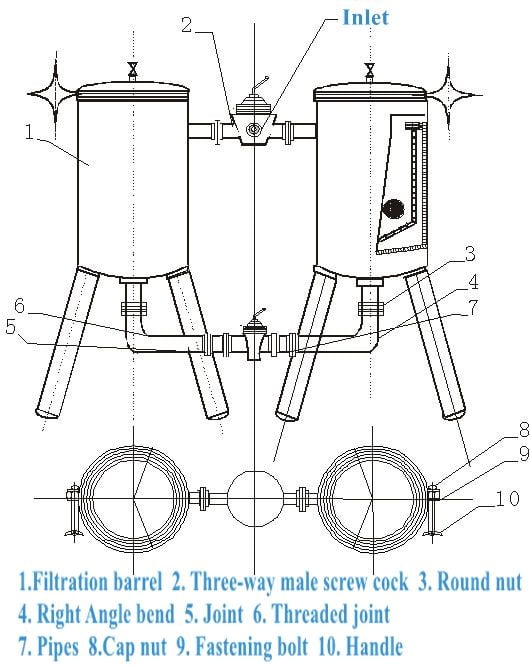
Raw milk enters through the inlet three-way ball valve, distributes between the two cylinders, passes through the mesh screens, and exits as filtered milk through the outlet valve. Each cylinder is equipped with a top-mounted air release valve.
During startup, trapped air reduces effective filtration area by 15-20%. Open the air release valves for 10-15 seconds until liquid begins to seep through, then close.
Operating Sequence
| Step | Action | Time | Notes |
|---|---|---|---|
| 1 | Open inlet valve to Cylinder A | – | Both cylinders clean |
| 2 | Open outlet valve from Cylinder A | – | Air release valves closed |
| 3 | Open air release valves briefly | 10-15 sec | Bleed trapped air |
| 4 | Monitor pressure differential | Continuous | Normal: 0.05-0.1 MPa |
| 5 | Switch to Cylinder B when pressure rises | 30 sec | Turn both valves simultaneously |
| 6 | Clean Cylinder A | 10-15 min | Remove, rinse, reinstall |
The pressure differential between inlet and outlet serves as the primary indicator for cylinder switching. When inlet pressure is 0.2 MPa and outlet drops to 0.12 MPa or below, switch to the clean cylinder.
Filter Mesh Selection
Mesh size determines both the particle size captured and the flow rate through the filter.
| Mesh Size | Particle Size Captured | Flow Rate | Best Application |
|---|---|---|---|
| 100 mesh | 150 microns | 100% | Pre-filtration for very dirty milk |
| 200 mesh | 75 microns | 85% | Standard raw milk filtration |
| 300 mesh | 50 microns | 70% | Premium yogurt, fine clarification |
| 400 mesh | 37 microns | 55% | Specialty products, lab-grade |
For standard yogurt production, 200 mesh provides adequate filtration of hair, feed particles, and visible sediment while maintaining acceptable flow rates. Raw milk quality from small farms without pre-filtering may require 100 mesh as a first pass. Premium Greek yogurt production benefits from 300 mesh, though cleaning frequency increases from 3-4 hours to 1.5-2 hours between changes.
A 2000L/day facility in Lagos initially specified 400 mesh. Filter changes were required every 45 minutes. Switching to 200 mesh reduced daily filter changes from 16 to 5 with no perceptible change in final product quality.
Technical Specifications
| Parameter | Specification |
|---|---|
| Filter Type | Single or Duplex (Double) |
| Material | Food-grade stainless steel (SUS 304) |
| Surface Finish | Polished inner and outer surfaces, Ra ≤ 0.8μm |
| Design Pressure | 0.3 MPa |
| Working Pressure | 0.1-0.25 MPa |
| Connection Type | Expansion/contraction fittings, clamp connections |
| Valve Type | Three-way ball valves (SUS 304) |
| Filter Mesh Range | 100-400 mesh (customizable) |
| Air Release | Top-mounted manual valves |
| Inlet/Outlet | Sanitary fittings (DN25-DN50) |
| Operating Temperature | 0-100°C |
Capacity by Model
| Model | Configuration | Capacity (L/hr) | Inlet/Outlet | Weight |
|---|---|---|---|---|
| SL-MF-1 | Single | 500-1000 | DN25 | 18 kg |
| SL-MF-2 | Duplex | 1000-3000 | DN32 | 35 kg |
| SL-MF-3 | Duplex | 3000-5000 | DN40 | 52 kg |
| SL-MF-4 | Duplex | 5000-8000 | DN50 | 78 kg |
Installation Requirements
Mounting height. Position the filter outlet at least 0.5 meters above the inlet of downstream equipment (typically the pasteurizer). This gravity assist reduces transfer pump load.
Bypass piping. Install a bypass line with a manual valve around the duplex filter. During deep maintenance—gasket replacement, welded seam inspection—the bypass allows continued production.
Drain positioning. The drain outlet should be at the lowest point of the installation with a floor drain directly beneath. Cleaning flushes 20-30 liters of water and debris through this outlet.
Cleaning and Maintenance
After each production run, close inlet and outlet valves, open the drain, and flush each cylinder with warm water (40-50°C) for 2-3 minutes. Remove the mesh screen and rinse under running water. Stubborn residue requires soaking in 2% NaOH solution for 15 minutes followed by thorough rinsing.
Weekly maintenance includes complete disassembly—mesh screens, gaskets, and air release valves. Inspect screens for tears or stretched mesh. A 2-3mm hole allows contaminants through and compromises filtration.
Maintenance Schedule
| Frequency | Task | Time Required |
|---|---|---|
| After each batch | Flush with warm water, rinse mesh | 10 min |
| Weekly | Deep clean, inspect screens and gaskets | 30 min |
| Monthly | Check welded seams, test valve operation | 20 min |
| Every 500-1000 hours | Replace mesh screens | 15 min |
Troubleshooting
| Problem | Cause | Fix |
|---|---|---|
| Flow rate drops 30%+ | Mesh clogged | Clean or replace screen |
| Pressure differential > 0.15 MPa | Dirty filter element | Switch to clean cylinder, clean clogged one |
| Leaking at cylinder base | Worn gasket | Replace gasket (standard size, $5-10) |
| Air in filtered milk outlet | Air release valve stuck open | Clean valve seat, replace if damaged |
| Milk bypassing filter | Damaged mesh or improper seating | Replace screen, ensure proper seating |
| Valve hard to turn | Milk residue buildup | Disassemble valve, clean with warm water |
Applications Beyond Dairy
The duplex filter design is suitable for any liquid requiring particulate removal. Shuliy has installed these units in juice plants in Kenya, breweries in Tanzania, and sauce factories in Vietnam.
| Industry | Applications | Typical Mesh |
|---|---|---|
| Dairy | Raw milk, yogurt, cream, whey | 200-300 mesh |
| Beverage | Fruit juice, beer, wine | 100-200 mesh |
| Food Processing | Sauces, soups, syrups | 80-150 mesh |
| Pharmaceutical | Liquid medications | 300-400 mesh |
For non-dairy applications, verify chemical compatibility. SUS 304 handles most food-grade liquids. For liquids with pH below 4 or above 9 over extended periods, SUS 316L is recommended.
Related Products
- Yogurt Production Line – Complete turnkey solution
- Milk Pasteurizer Machine – Sterilizes filtered milk
- Cow Milking Machine – Automated milking source
What mesh size should I use for milk filtration?
200 mesh is recommended for standard raw milk filtration. It captures hair, feed particles, and visible sediment while maintaining good flow rates. For poor quality raw milk, use 100 mesh as pre-filtration. For premium products like Greek yogurt, 300 mesh provides finer filtration but requires more frequent cleaning.
How often should I clean the duplex filter?
Flush with warm water after each production batch (10 minutes). Perform a deep clean weekly, including screen removal and gasket inspection. Replace mesh screens every 500-1000 operating hours or when tears, holes, or stretched mesh are detected.
Can I use the duplex filter for liquids other than milk?
Yes. The duplex filter works for fruit juices, beer, wine, sauces, and other food-grade liquids. For non-dairy applications, verify chemical compatibility—SUS 304 handles most food liquids, but for pH below 4 or above 9, SUS 316L is recommended.
How do I know when to switch between filter cylinders?
Monitor the pressure differential between inlet and outlet. When the differential exceeds 0.15 MPa or flow rate drops noticeably, switch to the clean cylinder. In a typical 500L/day operation with 200 mesh, this occurs every 3-4 hours.
Yogurt Duplex Filter | Milk Filter - Shuliy Yogurt Production Line
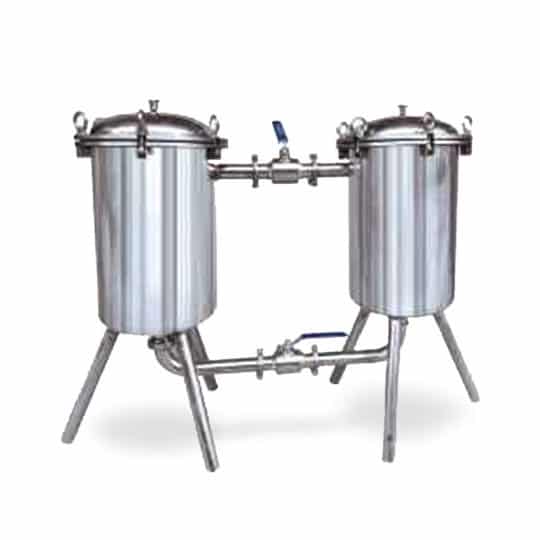
The milk filter (duplex filter) is the industrial filtering device for all kinds of liquid product filtration, and it is especially practical for the filtering of fruit juices, drinks, milk, and other liquid foods.
Product SKU: SL-SDMA-1512
Product Brand: SHULIY
Product Currency: USD
Product Price: 1299
Price Valid Until: 2029-01-31
Product In-Stock: InStock
10
Yogurt Duplex Filter | Milk Filter - Shuliy Yogurt Production Line
The milk filter (duplex filter) is the industrial filtering device for all kinds of liquid product filtration, and it is especially practical for the filtering of fruit juices, drinks, milk, and other liquid foods.
Product SKU: SL-SDMA-1512
Product Brand: SHULIY
Product Currency: USD
Product Price: 1299
Price Valid Until: 2029-01-31
Product In-Stock: InStock
10
Yogurt Duplex Filter | Milk Filter - Shuliy Yogurt Production Line
The milk filter (duplex filter) is the industrial filtering device for all kinds of liquid product filtration, and it is especially practical for the filtering of fruit juices, drinks, milk, and other liquid foods.
Product SKU: SL-SDMA-1512
Product Brand: SHULIY
Product Currency: USD
Product Price: 1299
Price Valid Until: 2029-01-31
Product In-Stock: InStock
10
Yogurt Duplex Filter | Milk Filter - Shuliy Yogurt Production Line
The milk filter (duplex filter) is the industrial filtering device for all kinds of liquid product filtration, and it is especially practical for the filtering of fruit juices, drinks, milk, and other liquid foods.
Product SKU: SL-SDMA-1512
Product Brand: SHULIY
Product Currency: USD
Product Price: 1299
Price Valid Until: 2029-01-31
Product In-Stock: InStock
10
Yogurt Duplex Filter | Milk Filter - Shuliy Yogurt Production Line
The milk filter (duplex filter) is the industrial filtering device for all kinds of liquid product filtration, and it is especially practical for the filtering of fruit juices, drinks, milk, and other liquid foods.
Product SKU: SL-SDMA-1512
Product Brand: SHULIY
Product Currency: USD
Product Price: 1299
Price Valid Until: 2029-01-31
Product In-Stock: InStock
10
Yogurt Duplex Filter | Milk Filter - Shuliy Yogurt Production Line
The milk filter (duplex filter) is the industrial filtering device for all kinds of liquid product filtration, and it is especially practical for the filtering of fruit juices, drinks, milk, and other liquid foods.
Product SKU: SL-SDMA-1512
Product Brand: SHULIY
Product Currency: USD
Product Price: 1299
Price Valid Until: 2029-01-31
Product In-Stock: InStock
10
Hello
we are milk production company we are looking for filter for milk.
We produce daly 5000 l of milk, we pump milk with pump (25000 l/hour), so we
need small filer for these quantity.
Plese send some offers and picture and dimenzion.
Thanks for your inquiry, I will contact you via email soon, please have a check.
Hi, I process 100 liter in 1 hour. Is this enough for me ? What can be this equipment velocity ?
Thanks for your inquiry. I will reply via email very soon, pls check your mail.
Nguyên lý máy này vận hành như thế nào nhỉ ? Có thể giải thích rõ hơn không ?
Tôi thông báo cho người quản lý bán hàng chuyên nghiệp của chúng tôi để gửi
Hola. Me gustaría saber qué tipo de filtro tiene la máquina y sus especificaciones. Es un filtro de manga? Filtro trap? Muchas gracias.
Hola, lo he recibido y le he pedido a nuestro gerente de ventas profesional que le envíe los detalles y el precio de la máquina. Por favor, preste atención al correo electrónico de Shuliy.
Hola que tal?
Me gustaría saber las medidas del equipo
Hola, lo recibí y coordiné con nuestro gerente de ventas profesional para enviarle los detalles y el precio de la máquina. Preste atención al correo electrónico de Shuliy.
Buenas noches somos una empresa productora de Leche y queríamos cotizar la capacidad del filtro
Hola, lo recibí y me comuniqué con nuestro gerente de ventas profesional para enviarle los detalles y el precio de la máquina. Por favor, preste atención al correo electrónico de Shuliy.
Estoy Interezado en comprar los filtros dobles y sencillos para filtrar yogur o leche en cantidades desde 500 litros /h hasta 25000 l/h para comercializar en Colombia y Sur America me podría enviar la ficha técnica de los equipos y el costo de uno de 1000 Litrs / h y otro de 10000 l/ h como ejemplo. ? De cuántas micras sería el filtro ya sea para yogur y otro para leche.
Gracias ATT: William G G
WhatsApp/ weechap: 57-3122909962
Email. Willgogo55@gmail.com
Hola, he contactado a nuestro asesor de ventas para que le envíe los detalles y el precio de la máquina. Por favor, esté atento a su mensaje de WhatsApp y siga el correo electrónico de Shuliy.
Hola que tal?
Me gustaría saber las medidas del equipo y la capacidad que tiene
Hola, le he pedido a nuestro asesor de ventas que le envíe los detalles y el precio de la máquina. Por favor, revise el correo electrónico de Shuliy.