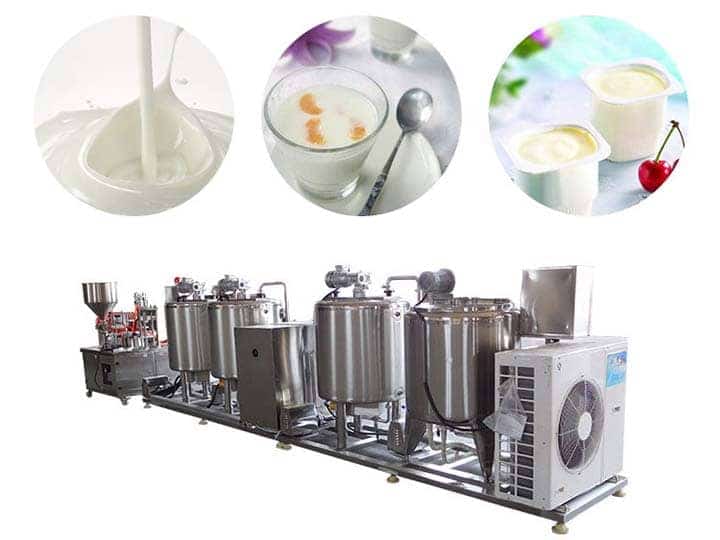
Fruit yogurt is an upgraded innovation based on traditional yogurt, combining the health benefits of probiotics with the natural flavors and nutrients of fresh fruits. With the growing consumer demand for flavored dairy products, investing in a fruit yogurt production line has become an attractive business opportunity. This comprehensive cost guide breaks down the investment requirements, equipment configuration, and ROI potential to help you make an informed decision.
The Production Process of Fruit Yogurt
The fruit yogurt production line shares the same core process as standard yogurt manufacturing, with one key difference: fruit preparation addition after fermentation. Understanding this process is essential for proper equipment selection and investment planning.
Standard Fruit Yogurt Production Workflow
| Stage | Process | Temperature | Duration | Key Equipment |
|---|---|---|---|---|
| 1. Milk Reception | Quality testing and cooling | 4°C | 30 min | Reception tank |
| 2. Filtration | Remove impurities | 4-10°C | 15 min | Duplex filter |
| 3. Pre-heating | Warm to processing temp | 40-50°C | 20 min | Pre-heating tank |
| 4. Homogenization | Break down fat globules | 60-70°C | 10 min | Homogenizer |
| 5. Pasteurization | Heat treatment for safety | 85-95°C | 15-30 min | Pasteurizer |
| 6. Cooling | Reduce to fermentation temp | 42-45°C | 20 min | Plate cooler |
| 7. Inoculation | Add yogurt culture | 42-45°C | 10 min | Fermentation tank |
| 8. Fermentation | Culture incubation | 42-45°C | 4-6 hours | Fermentation tank |
| 9. Fruit Addition | Add fruit preparation | 15-20°C | 15 min | Fruit dosing system |
| 10. Filling | Package product | 4-6°C | Continuous | Filling machine |
| 11. Cold Storage | Store finished product | 2-6°C | Until distribution | Cold room |
How to Add Fruit to Yogurt
Adding fruit to yogurt requires careful timing and proper equipment to ensure product quality and consistency. There are two main methods:
Method 1: Fruit Preparation Addition (Post-Fermentation)
This is the most common method for commercial fruit yogurt production:
- Prepare Fruit Base: Cook fruit with sugar and stabilizers to create fruit preparation
- Complete Yogurt Fermentation: Follow standard yogurt production process
- Cool to 15-20°C: Reduce temperature before fruit addition
- Add Fruit Preparation: Use fruit dosing system for accurate ratio (typically 10-20% fruit)
- Gentle Mixing: Avoid over-mixing to maintain yogurt texture
- Fill and Package: Use yogurt filling machine for final packaging
Method 2: Fruit Layering (Bottom of Cup)
This method creates visually appealing layered yogurt products:
- Fill Fruit Base First: Add 10-15g fruit preparation to bottom of cup
- Fill Yogurt: Add fermented yogurt on top of fruit layer
- Seal and Store: Complete packaging and cold storage
Fruit Preparation Equipment Requirements
| Equipment | Function | Capacity Options | Estimated Cost |
|---|---|---|---|
| Fruit Cooking Tank | Cook fruit with sugar | 50-200L | $3,000-8,000 |
| Fruit Storage Tank | Store prepared fruit | 100-500L | $2,000-5,000 |
| Fruit Dosing System | Accurate fruit addition | Match production line | $5,000-15,000 |
| Mixing Tank | Blend fruit with yogurt | 100-500L | $3,000-8,000 |
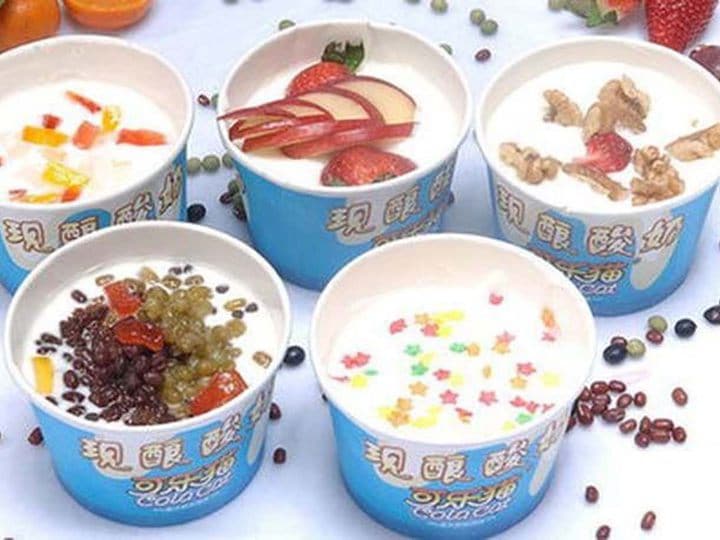
Fruit Yogurt Production Line Investment Cost
The investment for a fruit yogurt production line is higher than a standard yogurt line due to the additional fruit preparation and dosing equipment. Here's a detailed cost breakdown by capacity:
Small Scale (200L Daily Capacity)
| Equipment | Cost Range (USD) | Notes |
|---|---|---|
| Milk Reception Tank (200L) | $3,000-5,000 | With cooling system |
| Duplex Filter | $1,500-2,500 | 60-100 mesh |
| Pasteurizer (200L) | $5,000-8,000 | Batch type |
| Homogenizer | $4,000-6,000 | 500L/hr |
| Fermentation Tank (200L) | $6,000-9,000 | Temperature controlled |
| Fruit Cooking Tank (50L) | $3,000-5,000 | For fruit preparation |
| Fruit Dosing System | $5,000-8,000 | Semi-automatic |
| Filling Machine | $4,000-7,000 | 500 cups/hr |
| CIP Cleaning System | $3,000-5,000 | Basic system |
| Total Equipment Cost | $34,500-55,500 | |
| Facility Setup | $10,000-20,000 | Renovation, utilities |
| Working Capital (3 months) | $15,000-25,000 | Operating expenses |
| Total Investment | $59,500-100,500 |
Medium Scale (500L Daily Capacity)
| Equipment | Cost Range (USD) | Notes |
|---|---|---|
| Milk Reception Tank (500L) | $5,000-8,000 | With cooling system |
| Duplex Filter | $2,500-4,000 | 60-100 mesh |
| Pasteurizer (500L) | $9,000-14,000 | Continuous type |
| Homogenizer | $7,000-10,000 | 1000L/hr |
| Fermentation Tank (500L) | $10,000-15,000 | Temperature controlled |
| Fruit Cooking Tank (100L) | $5,000-8,000 | For fruit preparation |
| Fruit Storage Tank (200L) | $3,000-5,000 | With agitation |
| Fruit Dosing System | $8,000-15,000 | Semi to fully automatic |
| Filling Machine | $7,000-12,000 | 1000 cups/hr |
| CIP Cleaning System | $5,000-8,000 | Complete system |
| Total Equipment Cost | $61,500-99,000 | |
| Facility Setup | $20,000-40,000 | Renovation, utilities |
| Working Capital (3 months) | $25,000-40,000 | Operating expenses |
| Total Investment | $106,500-179,000 |
Large Scale (1000L Daily Capacity)
| Equipment | Cost Range (USD) | Notes |
|---|---|---|
| Milk Reception Tank (1000L) | $8,000-12,000 | With cooling system |
| Duplex Filter | $4,000-6,000 | 60-100 mesh |
| Pasteurizer (1000L) | $14,000-20,000 | Continuous type |
| Homogenizer | $10,000-15,000 | 2000L/hr |
| Fermentation Tank (1000L) | $15,000-25,000 | Temperature controlled |
| Fruit Cooking Tank (200L) | $8,000-12,000 | For fruit preparation |
| Fruit Storage Tank (500L) | $5,000-8,000 | With agitation |
| Fruit Dosing System | $12,000-20,000 | Fully automatic |
| Filling Machine | $12,000-20,000 | 2000 cups/hr |
| CIP Cleaning System | $8,000-12,000 | Complete system |
| Total Equipment Cost | $96,000-150,000 | |
| Facility Setup | $40,000-80,000 | Renovation, utilities |
| Working Capital (3 months) | $40,000-60,000 | Operating expenses |
| Total Investment | $176,000-290,000 |
Fruit Yogurt vs Plain Yogurt: Investment Comparison
| Factor | Plain Yogurt Line | Fruit Yogurt Line | Difference |
|---|---|---|---|
| Equipment Count | 7-8 pieces | 10-12 pieces | +3-4 pieces |
| Equipment Cost | $25,000-80,000 | $35,000-150,000 | +30-50% |
| Floor Space | 20-80 m² | 30-120 m² | +50% |
| Staff Required | 2-4 persons | 3-6 persons | +1-2 persons |
| Product Margin | 55-65% | 60-70% | +5% |
| Market Price | $1.50-2.50/L | $2.00-3.50/L | +30-40% |
ROI Analysis for Fruit Yogurt Production
Revenue Projection (500L Daily Capacity)
| Metric | Value |
|---|---|
| Daily production | 500 liters |
| Average selling price | $2.50/liter (fruit yogurt premium) |
| Daily revenue | $1,250 |
| Daily production cost | $500 (40% of revenue) |
| Daily gross profit | $750 |
| Monthly operating days | 25 days |
| Monthly gross profit | $18,750 |
| Monthly operating expenses | $8,000 |
| Monthly net profit | $10,750 |
| Total investment | $140,000 (average) |
| Payback period | 13-15 months |
Key Profitability Factors
| Factor | Impact | Optimization Strategy |
|---|---|---|
| Fruit cost | High | Source seasonal fruits locally |
| Product pricing | High | Premium positioning for fruit flavors |
| Production efficiency | Medium | Optimize batch scheduling |
| Market demand | High | Focus on popular flavors (strawberry, peach, mango) |
| Brand recognition | Medium | Invest in packaging and marketing |
Popular Fruit Yogurt Flavors and Market Demand
| Flavor | Market Share | Fruit Cost | Selling Price Premium |
|---|---|---|---|
| Strawberry | 35% | Low | +20-30% |
| Peach | 20% | Medium | +25-35% |
| Mango | 15% | Medium | +30-40% |
| Blueberry | 10% | High | +40-50% |
| Mixed Berry | 10% | Medium | +30-40% |
| Other | 10% | Varies | +20-50% |
Conclusion
Investing in a fruit yogurt production line requires 30-50% more capital than a plain yogurt line due to additional fruit preparation and dosing equipment. However, the higher product margins (60-70% vs 55-65%) and premium pricing potential (+30-40%) make it a highly profitable investment with typical payback periods of 13-18 months.
Contact Shuliy Machinery for a customized fruit yogurt production line quotation. Our dairy processing experts will help you design the perfect equipment configuration based on your target capacity, fruit types, and budget.
How much does a fruit yogurt production line cost?
A fruit yogurt production line costs between $35,000 and $150,000 for equipment, depending on capacity. A 200L line costs $35,000-55,000, a 500L line costs $60,000-100,000, and a 1000L line costs $95,000-150,000. Total investment including facility setup and working capital ranges from $60,000 to $290,000.
What is the difference between fruit yogurt and plain yogurt production lines?
Fruit yogurt production lines require additional equipment for fruit preparation and dosing, including fruit cooking tanks, fruit storage tanks, and fruit dosing systems. This adds 30-50% to the equipment cost compared to plain yogurt lines.
Is fruit yogurt production profitable?
Yes, fruit yogurt production is highly profitable with gross margins of 60-70%. The premium pricing for fruit flavors (+30-40% over plain yogurt) and strong market demand result in typical payback periods of 13-18 months.
What equipment is needed for fruit yogurt production?
Essential equipment includes milk reception tanks, duplex filters, pasteurizers, homogenizers, fermentation tanks, fruit cooking tanks, fruit storage tanks, fruit dosing systems, filling machines, and CIP cleaning systems.