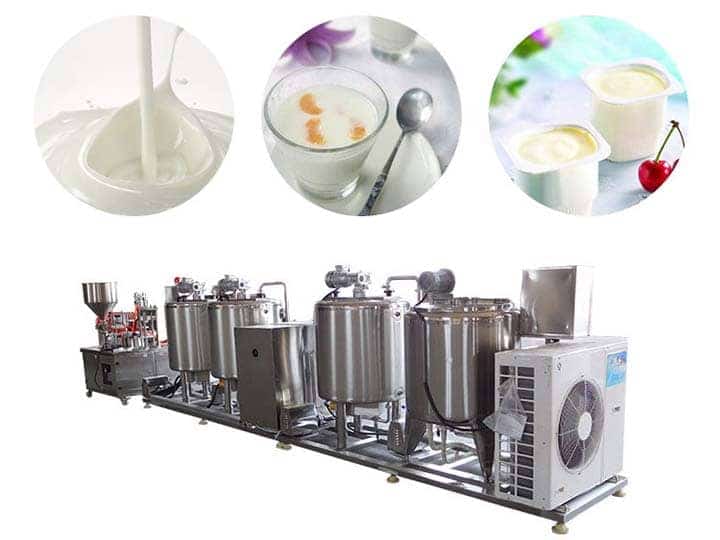
Investing in the right yogurt equipment is one of the most critical decisions for anyone entering the dairy processing business. Whether you're a dairy farmer looking to add value to your milk production, an entrepreneur starting a yogurt brand, or an established business expanding your product line, choosing the appropriate machinery can make the difference between success and struggle. This comprehensive yogurt equipment buying guide will walk you through everything you need to know about selecting yogurt equipment that matches your production goals, budget, and quality standards.
Understanding Your Yogurt Production Needs
Before diving into equipment specifications and features, it's essential to clearly define your production requirements. Taking time to assess your needs will help you avoid over-investing in unnecessary capabilities or under-investing in critical functionality.
Assessing Your Production Scale
Your daily production volume is the primary factor determining the type and size of equipment you need:
| Scale | Daily Output | Equipment Cost | Target Market | Staff Required |
|---|---|---|---|---|
| Small Scale | 50-200L/day | $15,000-30,000 | Farm shops, local cafes | 2-3 persons |
| Medium Scale | 500-1000L/day | $40,000-100,000 | Regional distribution | 4-6 persons |
| Large Scale | 2000L+/day | $150,000-500,000+ | National retail supply | 8-15 persons |
Defining Your Product Range
Different yogurt products require specific equipment capabilities:
| Product Type | Key Equipment Requirements | Recommended Solution |
|---|---|---|
| Stirred Yogurt | Standard fermentation tanks, mixing equipment | Fermentation Maker |
| Set Yogurt | Individual cup filling, precise temperature control | Filling Machine |
| Greek Yogurt | Straining equipment, higher solids handling | Custom Solution |
| Drinking Yogurt | Liquid filling systems, extended fermentation control | Complete Line |
| Flavored Yogurt | Fruit preparation equipment, flavor injection systems | Consult Our Experts |
Essential Yogurt Equipment Components
A complete yogurt production line consists of several interconnected components, each playing a vital role in the manufacturing process:
1. Milk Reception and Storage Equipment
Quality yogurt starts with quality milk handling:
- Cooling Tanks: Maintain raw milk at 4°C to prevent bacterial growth and preserve freshness
- Receiving Stations: Sanitary connections for milk delivery with filtration and measurement capabilities
- Storage Capacity: Sufficient volume to hold 1-2 days of production requirements
2. Milk Processing Equipment
Core processing components transform raw milk into yogurt-ready material:
- Filtration Systems: Remove impurities and ensure product purity
- Pre-heating Tanks: Gradually warm milk to optimal processing temperature
- Homogenizers: Break down fat globules for smooth texture and stability
- Pasteurizers: Eliminate pathogens while preserving beneficial properties
3. Fermentation Equipment
The heart of yogurt production, where milk transforms into yogurt:
- Fermentation Tanks: Temperature-controlled vessels for culture development
- Incubation Chambers: Maintain precise temperature and humidity for optimal fermentation
- Culture Dosing Systems: Accurate measurement and addition of yogurt starter cultures
4. Packaging and Filling Equipment
Final processing steps prepare yogurt for market:
- Filling Machines: Accurate dispensing into cups, bottles, or bulk containers
- Sealing Equipment: Secure closure to maintain freshness and prevent contamination
- Labeling Systems: Product identification and regulatory compliance information
- Refrigeration Units: Cold storage to maintain product quality during packaging
5. Cleaning and Sanitation Systems
Maintaining hygiene standards is crucial for food safety:
- CIP Systems (Clean-in-Place): Automated cleaning without equipment disassembly
- Sterilization Equipment: Steam or chemical sanitization capabilities
- Water Treatment: Purified water supply for cleaning and processing
Key Features to Look for in Yogurt Equipment
Material Quality and Construction
The materials used in equipment construction directly impact product safety, equipment longevity, and maintenance requirements:
| Material Grade | Application | Cost | Corrosion Resistance |
|---|---|---|---|
| SUS 304 | Standard milk contact surfaces | Standard | Good |
| SUS 316L | Acidic products, high chloride environments | +15-20% | Excellent |
| Food-grade Plastic | Non-critical components | Low | Moderate |
- Food-Grade Stainless Steel: 304 or 316 grade for all milk-contact surfaces
- Corrosion Resistance: Essential for handling acidic yogurt products and cleaning chemicals
- Surface Finish: Smooth, polished surfaces prevent bacterial harboring and facilitate cleaning
- Weld Quality: Smooth, continuous welds without cracks or crevices
Temperature Control Precision
Accurate temperature management is critical for yogurt quality:
| Process | Required Temperature | Precision | Impact of Poor Control |
|---|---|---|---|
| Pasteurization | 85-95°C | ±1°C | Incomplete pathogen kill |
| Homogenization | 60-70°C | ±2°C | Inconsistent texture |
| Fermentation | 42-45°C | ±0.5°C | Failed fermentation |
| Cooling | 4-6°C | ±1°C | Reduced shelf life |
- Digital Controls: Precise temperature setting and monitoring
- Uniform Heat Distribution: Jacketed tanks with efficient heat transfer
- Rapid Cooling Capability: Quick transition between processing stages
- Temperature Recording: Data logging for quality control and traceability
Automation and Control Systems
Modern automation features improve consistency and reduce labor:
| Automation Level | Labor Required | Cost Range | Best For |
|---|---|---|---|
| Manual | 5-8 persons | $15,000-25,000 | Startups, testing |
| Semi-Automatic | 3-4 persons | $25,000-80,000 | Growing businesses |
| Fully Automatic | 1-2 persons | $80,000-200,000+ | Large-scale production |
- PLC Controls: Programmable logic controllers for process automation
- Touchscreen Interfaces: User-friendly operation and monitoring
- Recipe Management: Stored programs for different yogurt varieties
- Alarm Systems: Alerts for temperature deviations or equipment malfunctions
- Remote Monitoring: Internet-connected systems for off-site supervision
Factors Affecting Yogurt Equipment Prices
Understanding price determinants helps in budgeting and value assessment:
| Factor | Impact on Price | Considerations |
|---|---|---|
| Production Capacity | High | Larger equipment costs more but offers economies of scale |
| Automation Level | High | Manual < Semi-automatic < Fully automatic |
| Material Grade | Medium | 316 stainless steel costs more than 304 but offers better corrosion resistance |
| Brand and Origin | Medium | Established brands may cost more but offer better support |
| Customization | Medium-High | Special features or sizes increase costs |
| Certification | Low-Medium | CE, ISO, or other certifications may add to cost |
2026 Yogurt Equipment Price Ranges
While prices vary based on specifications and suppliers, here are general ranges to guide your budgeting:
Entry-Level Equipment (Small Scale)
| Equipment | Price Range | Capacity |
|---|---|---|
| Complete Basic Line | $15,000-30,000 | 50-200L/day |
| Individual Fermentation Units | $2,000-8,000 | 100-500L |
| Packaging Equipment | $3,000-10,000 | 500-1000 cups/hr |
| Best For: Startups, farm diversification, small specialty producers |
Mid-Range Equipment (Medium Scale)
| Equipment | Price Range | Capacity |
|---|---|---|
| Complete Production Line | $40,000-100,000 | 500-1000L/day |
| Semi-Automatic Systems | $25,000-60,000 | 300-800L/day |
| Advanced Packaging Lines | $15,000-40,000 | 1000-2000 cups/hr |
| Best For: Growing businesses, regional distribution, multi-product lines |
Industrial Equipment (Large Scale)
| Equipment | Price Range | Capacity |
|---|---|---|
| Full Automated Lines | $150,000-500,000+ | 2000L+/day |
| High-Capacity Fermentation | $50,000-150,000 | 1000-5000L |
| Integrated Packaging Systems | $40,000-120,000 | 3000-6000 cups/hr |
| Best For: Large commercial operations, national distribution, industrial production |
Equipment Comparison by Capacity
| Specification | 200L Line | 500L Line | 1000L Line | 2000L Line |
|---|---|---|---|---|
| Pasteurizer Capacity | 200L/batch | 500L/batch | 1000L/batch | 2000L/batch |
| Fermentation Tanks | 2 × 100L | 2 × 250L | 2 × 500L | 4 × 500L |
| Filling Speed | 500 cups/hr | 1000 cups/hr | 2000 cups/hr | 3000 cups/hr |
| Power Requirement | 15 kW | 30 kW | 50 kW | 100 kW |
| Floor Space | 20 m² | 40 m² | 80 m² | 150 m² |
| Staff Required | 2-3 | 3-4 | 4-6 | 8-10 |
| Equipment Cost | $15,000-25,000 | $40,000-70,000 | $80,000-150,000 | $150,000-300,000 |
Expert Tips for Making the Right Equipment Choice
1. Plan for Future Growth
Choose equipment that can accommodate 20-30% capacity growth without complete replacement. Modular systems allow gradual expansion as your business develops. It's often more cost-effective to buy slightly larger equipment initially than to replace undersized equipment within 2-3 years.
2. Prioritize Quality Over Price
While budget constraints are real, investing in quality equipment reduces long-term costs through lower maintenance, longer lifespan, and consistent product quality. Cheap equipment often leads to expensive problems.
3. Consider Total Cost of Ownership
Look beyond purchase price to include:
- Installation and commissioning costs
- Training and startup support
- Energy consumption and utility costs
- Maintenance and spare parts availability
- Technical support and service response times
4. Verify Compliance and Certification
Ensure equipment meets:
- Local food safety regulations
- International standards (CE, ISO, 3A Sanitary)
- Dairy industry specific requirements
- Electrical and safety codes
5. Request Demonstrations and References
Before finalizing purchases:
- Visit manufacturing facilities if possible
- Observe equipment operation demonstrations
- Contact existing customers for references
- Request trial runs with your specific products
- Review warranty terms and service agreements
Common Mistakes to Avoid When Buying Yogurt Equipment
Underestimating Capacity Requirements
Many buyers focus on current needs without accounting for growth. Equipment that's too small limits expansion, while significantly oversized equipment wastes capital and operating costs.
Ignoring Integration Complexity
Buying equipment from multiple suppliers without considering how components work together can lead to compatibility issues, inefficiencies, and maintenance challenges. A complete solution from one manufacturer ensures seamless integration.
Overlooking Training and Support
The best equipment performs poorly without proper operator training. Ensure your supplier provides comprehensive training and ongoing technical support. At Shuliy, we provide detailed training and 24/7 technical assistance.
Neglecting Future Product Diversification
If you plan to expand beyond basic yogurt into Greek yogurt, flavored varieties, or other dairy products, ensure your equipment can accommodate these future products.
Working with Shuliy Machinery for Your Equipment Needs
Shuliy Machinery has been a trusted manufacturer of yogurt processing equipment since 2011, serving customers across more than 50 countries. Our comprehensive approach ensures you receive not just equipment, but a complete production solution:
Our Comprehensive Services Include:
- Free Consultation: Expert guidance on equipment selection based on your specific requirements
- Customized Solutions: Equipment tailored to your production goals, space constraints, and budget
- Quality Manufacturing: Food-grade stainless steel construction with rigorous quality control
- Installation Support: On-site or remote assistance with equipment setup and commissioning
- Operator Training: Comprehensive training programs for your production team
- Technical Support: Responsive after-sales service and troubleshooting assistance
- Spare Parts Supply: Quick availability of replacement parts to minimize downtime
Take the Next Step in Your Yogurt Production Journey
Choosing the right yogurt equipment is a significant decision that impacts your product quality, operational efficiency, and business profitability. By following the guidelines in this comprehensive yogurt equipment buying guide, you're well-equipped to make an informed decision that supports your business goals.
Ready to Get Started? Contact Shuliy Machinery today for a free consultation. Our experienced team will help you navigate the equipment selection process, provide detailed quotations, and design a production solution tailored to your specific requirements.
Whether you're just starting out or looking to upgrade existing equipment, we're committed to helping you succeed in the dynamic and growing yogurt market. Let's work together to turn your yogurt production vision into reality.
How much does yogurt equipment cost in 2026?
Yogurt equipment costs range from $15,000 for small-scale lines (50-200L/day) to $500,000+ for fully automatic industrial systems (2000L+/day). Mid-range semi-automatic lines (500-1000L/day) cost $40,000-100,000.
What equipment do I need to start a yogurt business?
Essential equipment includes milk reception tanks, milk filters, pasteurizers, homogenizers, fermentation tanks, cooling systems, filling machines, and CIP cleaning systems. Shuliy offers complete production lines from 200L to 5000L capacity.
What is the difference between semi-automatic and fully automatic yogurt equipment?
Semi-automatic equipment requires 3-4 operators and costs $25,000-80,000, while fully automatic systems require only 1-2 operators and cost $80,000-200,000+. Fully automatic systems offer higher efficiency, consistency, and data logging capabilities.
How do I choose the right capacity yogurt equipment?
Calculate your target daily output and multiply by 1.3 to account for cleaning and maintenance downtime. For example, if you need 500L daily output, choose equipment with 650L+ capacity. Consider future growth of 20-30% when selecting capacity.