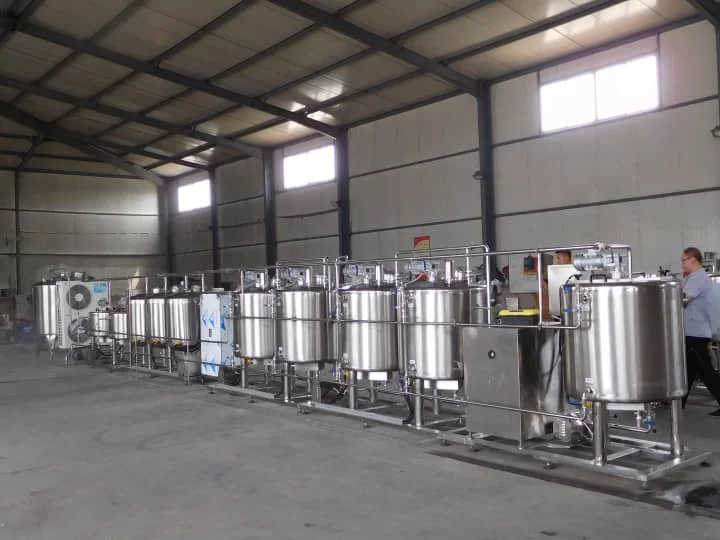
Greek Yogurt Production Guide: Complete Process, Equipment, and Investment
Greek yogurt has become one of the fastest-growing segments in the global dairy market, with annual growth rates exceeding 8% in many regions. Its thick, creamy texture and high protein content have made it a premium product that commands 40-60% higher prices than regular yogurt. This comprehensive guide covers everything you need to know about Greek yogurt production, from the straining process to equipment selection and investment planning.
Greek yogurt differs from regular yogurt primarily through its straining process, which removes whey and concentrates the solids:
Characteristic
Regular Yogurt
Greek Yogurt
Difference
Protein Content
3-5g per 100g
8-12g per 100g
2-3x higher
Sugar Content
10-15g per 100g
4-6g per 100g
50-60% lower
Fat Content
2-4g per 100g
5-10g per 100g
2-3x higher
Texture
Smooth, pourable
Thick, creamy
Strained
Yield
100% of milk
30-40% of milk
60-70% whey removed
Selling Price
$1.50-2.50/L
$3.00-5.00/L
40-60% premium
The Straining Process Explained
Greek yogurt production requires an additional straining step after fermentation:
Standard Fermentation: Follow regular yogurt production process
Straining: Remove whey through filtration or centrifugation
Concentration: Achieve 2-3x solids concentration
Packaging: Fill thick yogurt into containers
Greek Yogurt Production Process
Complete Production Workflow
Stage
Process
Temperature
Duration
Key Equipment
1. Milk Reception
Quality testing and cooling
4°C
30 min
Reception tank
2. Standardization
Adjust fat/protein content
40-50°C
20 min
Standardization tank
3. Homogenization
Break down fat globules
60-70°C
10 min
Homogenizer (200 bar)
4. Pasteurization
Heat treatment
90-95°C
10 min
Pasteurizer
5. Cooling
Reduce to fermentation temp
42-45°C
20 min
Plate cooler
6. Inoculation
Add culture
42-45°C
10 min
Fermentation tank
7. Fermentation
Culture incubation
42-45°C
5-7 hours
Fermentation tank
8. Cooling
Stop fermentation
4-6°C
30 min
Cooling system
9. Straining
Remove whey
4-6°C
2-4 hours
Straining system
10. Packaging
Fill and seal
4-6°C
Continuous
Filling machine
Key Differences from Regular Yogurt Production
Aspect
Regular Yogurt
Greek Yogurt
Impact
Milk Requirement
1L milk = 1L yogurt
3-4L milk = 1L yogurt
Higher raw material cost
Fermentation Time
6-8 hours
5-7 hours
Slightly shorter
Additional Step
None
Straining (2-4 hours)
Extra equipment needed
Yield
95-100%
30-40%
Lower output per batch
Shelf Life
14-21 days
21-28 days
Longer due to lower moisture
Equipment Required for Greek Yogurt Production
Core Equipment List
Equipment
Function
Specifications
Estimated Cost
Milk Reception Tank
Raw milk storage
500-2000L, SUS 304
$5,000-12,000
Standardization Tank
Adjust milk composition
500-2000L, with agitator
$6,000-15,000
Homogenizer
Fat globule reduction
200 bar pressure
$7,000-15,000
Pasteurizer
Heat treatment
90-95°C, 10 min
$9,000-20,000
Fermentation Tank
Culture incubation
Temperature controlled
$10,000-25,000
Straining System
Whey removal
Centrifugal or membrane
$15,000-50,000
Whey Collection Tank
Collect strained whey
1000-3000L
$3,000-8,000
Filling Machine
Package thick yogurt
500-2000 cups/hr
$7,000-20,000
CIP Cleaning System
Automated cleaning
Match line
$5,000-12,000
Straining System Options
The straining system is the key differentiator for Greek yogurt production:
Method
Description
Capacity
Cost
Best For
Centrifugal Separator
High-speed rotation separates whey
500-2000L/hr
$15,000-30,000
Medium-large production
Membrane Filtration
Ultrafiltration membranes
200-1000L/hr
$20,000-50,000
Premium quality, consistent
Cloth Bag Straining
Traditional gravity straining
50-200L/hr
$2,000-5,000
Small-scale, artisanal
Decanter Centrifuge
Continuous separation
1000-5000L/hr
$30,000-80,000
Industrial production
Straining Method Comparison
Factor
Centrifugal
Membrane
Cloth Bag
Decanter
Yield
35-40%
30-35%
25-30%
35-45%
Processing Time
1-2 hours
2-4 hours
8-12 hours
Continuous
Protein Retention
90-95%
95-98%
85-90%
90-95%
Labor Required
1 person
1 person
2-3 persons
1 person
Maintenance Cost
Medium
High
Low
Medium
Product Quality
Excellent
Premium
Good
Excellent
Investment Cost for Greek Yogurt Production
Small Scale (200L Daily Output)
Equipment
Cost Range (USD)
Notes
Milk Reception Tank (600L)
$5,000-8,000
3x milk volume needed
Standardization Tank
$6,000-10,000
For fat/protein adjustment
Pasteurizer (600L)
$9,000-14,000
Higher temp for Greek style
Homogenizer
$7,000-10,000
200 bar pressure
Fermentation Tank (600L)
$10,000-15,000
Temperature controlled
Centrifugal Strainer
$15,000-25,000
Key equipment
Whey Collection Tank
$3,000-5,000
For byproduct
Filling Machine
$7,000-12,000
For thick yogurt
CIP System
$5,000-8,000
Complete cleaning
Total Equipment
$67,000-107,000
Facility Setup
$20,000-40,000
Renovation, utilities
Working Capital (3 months)
$25,000-40,000
Operating expenses
Total Investment
$112,000-187,000
Medium Scale (500L Daily Output)
Equipment
Cost Range (USD)
Notes
Milk Reception Tank (1500L)
$8,000-12,000
3x milk volume needed
Standardization Tank
$10,000-15,000
For fat/protein adjustment
Pasteurizer (1500L)
$14,000-20,000
Higher temp for Greek style
Homogenizer
$10,000-15,000
200 bar pressure
Fermentation Tank (1500L)
$15,000-25,000
Temperature controlled
Membrane Filtration System
$20,000-40,000
Premium quality
Whey Collection Tank
$5,000-8,000
For byproduct
Filling Machine
$12,000-20,000
For thick yogurt
CIP System
$8,000-12,000
Complete cleaning
Total Equipment
$92,000-167,000
Facility Setup
$40,000-80,000
Renovation, utilities
Working Capital (3 months)
$40,000-60,000
Operating expenses
Total Investment
$172,000-307,000
Greek Yogurt vs Regular Yogurt: Profitability Comparison
Metric
Regular Yogurt
Greek Yogurt
Difference
Raw Milk Required
1L per 1L product
3-4L per 1L product
3-4x more
Production Cost
$0.60-0.90/L
$1.20-1.80/L
2x higher
Selling Price
$1.50-2.50/L
$3.00-5.00/L
2x higher
Gross Margin
55-65%
55-65%
Similar
Daily Revenue (500L)
$750-1,250
$1,500-2,500
2x higher
Monthly Net Profit
$8,000-12,000
$15,000-25,000
2x higher
Payback Period
12-18 months
14-20 months
Slightly longer
Whey Byproduct Revenue
The straining process produces significant whey that can be monetized:
Whey Product
Market Value
Processing Required
Revenue Potential
Liquid Whey
$0.10-0.20/L
Minimal
$50-100/day (500L line)
Whey Protein Concentrate
$5-10/kg
Drying, filtration
$200-500/day
Whey Powder
$2-4/kg
Spray drying
$100-300/day
Animal Feed
$0.05-0.10/L
Minimal
$25-50/day
Quality Control for Greek Yogurt
Key Quality Parameters
Parameter
Standard
Testing Method
Frequency
Protein Content
8-12g per 100g
Kjeldahl method
Every batch
Fat Content
5-10g per 100g
Gerber method
Every batch
pH
4.3-4.6
pH meter
Every batch
Viscosity
8000-15000 cP
Viscometer
Every batch
Total Solids
15-20%
Oven drying
Every batch
Microbial Count
<10,000 CFU/g
Plate count
Daily
Common Quality Issues and Solutions
Issue
Cause
Solution
Too Thin
Insufficient straining
Extend straining time, check membrane
Too Sour
Over-fermentation
Reduce fermentation time, cool faster
Grainy Texture
Over-homogenization
Reduce pressure to 150-200 bar
Whey Separation
Poor stabilization
Add stabilizers (pectin, gelatin)
Off-Flavors
Contamination
Improve sanitation, check culture
Market Opportunities for Greek Yogurt
Growing Market Segments
Segment
Growth Rate
Price Premium
Key Drivers
Plain Greek Yogurt
6-8% annually
40-50%
Health consciousness
Flavored Greek Yogurt
8-10% annually
50-60%
Taste variety
Greek Yogurt Drinks
10-12% annually
60-80%
Convenience
Organic Greek Yogurt
12-15% annually
80-100%
Premium positioning
High-Protein Greek Yogurt
15-18% annually
100-120%
Fitness market
Target Consumer Profiles
Consumer Type
Key Needs
Preferred Products
Price Sensitivity
Health Conscious
High protein, low sugar
Plain, organic
Low
Fitness Enthusiasts
Protein content, macros
High-protein, flavored
Low-Medium
Families
Taste, value
Flavored, large packs
Medium
Premium Buyers
Quality, brand
Organic, artisanal
Low
Conclusion
Greek yogurt production offers excellent profit potential with 55-65% gross margins and strong market demand. The key investment is the straining system ($15,000-80,000), which differentiates Greek yogurt from regular yogurt production. With proper equipment selection and quality control, a 500L daily Greek yogurt line can generate $15,000-25,000 monthly net profit.
Contact Shuliy Machinery for customized Greek yogurt production line solutions. Our dairy processing experts will help you design the perfect equipment configuration based on your target capacity, product specifications, and budget.
What is the difference between Greek yogurt and regular yogurt?
Greek yogurt is strained to remove whey, resulting in 2-3x higher protein content (8-12g vs 3-5g per 100g), 50-60% lower sugar, and a thick, creamy texture. It requires 3-4 liters of milk to produce 1 liter of Greek yogurt, compared to 1:1 for regular yogurt.
How much does Greek yogurt production equipment cost?
Greek yogurt production equipment costs $67,000-167,000 depending on capacity. The key additional cost is the straining system ($15,000-80,000), which is not needed for regular yogurt production. Total investment including facility and working capital ranges from $112,000-307,000.
Is Greek yogurt production profitable?
Yes, Greek yogurt production is highly profitable with 55-65% gross margins. A 500L daily line can generate $15,000-25,000 monthly net profit, with payback periods of 14-20 months. The premium pricing (40-60% higher than regular yogurt) offsets the higher raw material costs.
What equipment is needed for Greek yogurt production?
Essential equipment includes milk reception tanks, standardization tanks, homogenizers, pasteurizers, fermentation tanks, straining systems (centrifugal or membrane), whey collection tanks, filling machines, and CIP cleaning systems. The straining system is the key differentiator from regular yogurt production.