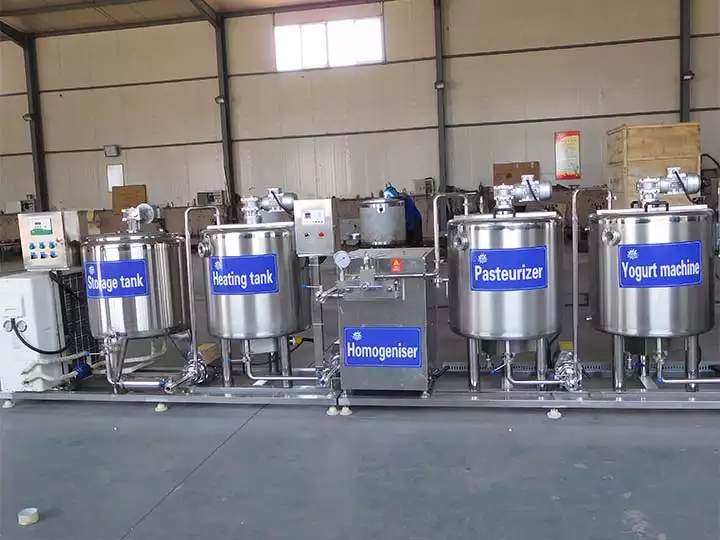
A small scale yogurt production line represents one of the most attractive investment opportunities in the food processing industry today. With relatively low initial capital requirements, manageable operational complexity, and strong market demand, these compact production systems enable entrepreneurs, dairy farmers, and small business owners to enter the lucrative yogurt market with minimized risk and maximized potential for profitability. This comprehensive guide explores why investing in a small yogurt production line could be the smartest business decision you make this year.
The Business Case for Small Scale Yogurt Production
When evaluating business opportunities, the combination of low investment barriers and high profit potential makes small scale yogurt production particularly compelling. Here’s why this business model stands out:
Low Capital Investment, High Return Potential
Unlike many food manufacturing businesses that require substantial capital outlay, small yogurt production lines offer an accessible entry point:
- Affordable Equipment Costs: Complete small-scale systems typically range from $10,000 to $50,000, depending on capacity and automation level.
- Minimal Infrastructure Requirements: Compact equipment footprints mean you can start in a small commercial space or even on a farm.
- Lower Operating Costs: Smaller batches require less energy, fewer staff, and reduced inventory investment.
- Faster Break-Even: Many operators achieve profitability within 12-18 months of operation.
Ideal for Initial Investors and Market Testing
For entrepreneurs new to dairy processing, small scale systems provide the perfect learning platform:
- Manageable Complexity: Learn yogurt production processes without overwhelming technical challenges.
- Market Testing Capability: Test different yogurt varieties, flavors, and packaging options with minimal risk.
- Scalable Operations: Start small and expand production capacity as demand grows.
- Proof of Concept: Demonstrate business viability before seeking larger investments.
Market Opportunities Driving Demand
The global yogurt processing line market is experiencing robust growth, creating favorable conditions for new entrants:
Health and Wellness Trends
Yogurt has firmly established itself as a health food staple, with consumers increasingly seeking:
- Probiotic Benefits: Growing awareness of gut health and immune system support drives yogurt consumption.
- High Protein Content: Fitness-conscious consumers favor yogurt as a protein-rich snack or meal replacement.
- Natural and Clean Label: Preference for products with simple, recognizable ingredients.
- Functional Foods: Demand for foods that provide health benefits beyond basic nutrition.
Regional Market Expansion
While yogurt has long been popular in Europe and North America, emerging markets present significant growth opportunities:
- Asia-Pacific Growth: Countries like China, India, and Southeast Asian nations are experiencing rapid yogurt market expansion.
- Latin America: Increasing urbanization and Western dietary influences drive demand.
- Africa: Growing middle class and health awareness create new market opportunities.
- Local Production Preference: Consumers increasingly favor locally-produced fresh yogurt over imported products.
Small Batch and Customization Trends
Modern consumers value variety and personalization, trends that favor small-scale producers:
- Artisanal Products: Premium positioning for handcrafted, small-batch yogurt.
- Local Sourcing: Farm-fresh milk from known sources appeals to quality-conscious consumers.
- Custom Flavors: Ability to quickly develop and test new flavor combinations.
- Specialty Diets: Opportunities in organic, lactose-free, and plant-based yogurt segments.
Complete Equipment Components of a Small Yogurt Production Line
Understanding the equipment that comprises a small yogurt production line helps in planning your investment and operations:
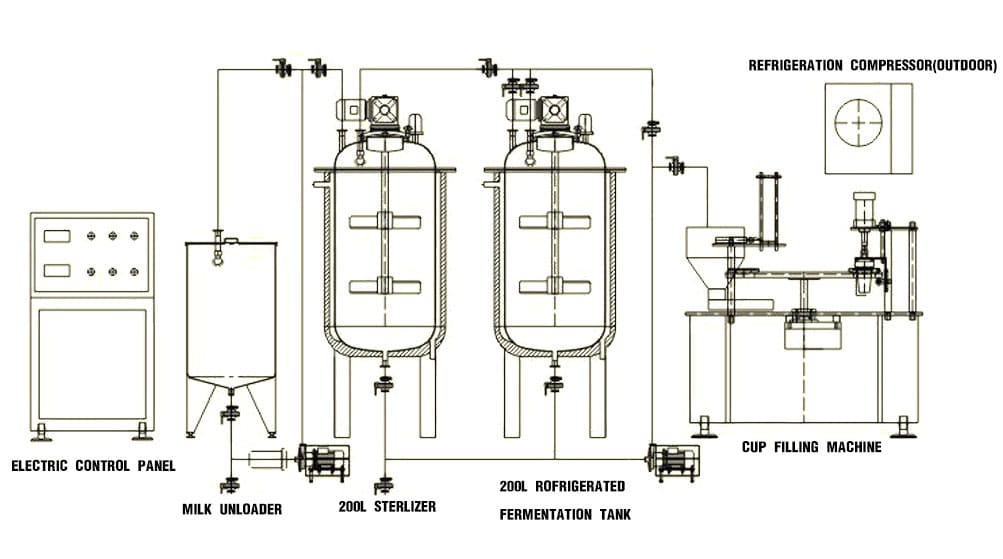
Core Processing Equipment
- Milk Cooling Tank: Maintains fresh milk at 4°C to preserve quality before processing. Essential for farms collecting milk over time.
- Filtration System: Removes impurities, hair, and debris from raw milk. Typically includes single or duplex filters with stainless steel mesh.
- Pre-heating Tank: Gently heats milk to 45-50°C in preparation for homogenization. Features jacketed design with temperature control.
- Homogenizer: High-pressure pump that breaks down fat globules to prevent cream separation and improve texture.
- Batch Pasteurizer: Heats milk to 85°C to eliminate pathogens while preparing milk for fermentation. Critical for food safety.
- Fermentation Tank: Temperature-controlled vessel where milk is inoculated with yogurt cultures and held at 40-45°C for 6-8 hours.
- Packaging Machine: Fills and seals yogurt into cups, bottles, or containers for distribution.
- CIP Cleaning System: Automated cleaning-in-place system ensures hygiene compliance with minimal labor.
Flexible Configuration Options
One of the key advantages of small scale systems is customization capability:
- Modular Design: Add or remove components based on your specific product requirements and budget.
- Capacity Matching: Equipment sizes range from 100L to 1000L batches to match your production goals.
- Automation Levels: Choose from manual, semi-automatic, or fully automatic configurations.
- Future Expansion: Systems designed to accommodate additional equipment as your business grows.
Key Benefits of Small Scale Yogurt Production Lines
1. Production Flexibility
Small batch sizes allow you to:
- Produce multiple yogurt varieties simultaneously
- Respond quickly to changing customer preferences
- Test new products without large inventory risk
- Accommodate seasonal demand fluctuations
2. Quality Control Advantages
Smaller operations enable closer attention to detail:
- Hands-on monitoring of each production batch
- Immediate identification and correction of issues
- Consistent product quality and taste
- Personalized quality assurance protocols
3. Market Positioning Benefits
Small scale production supports premium positioning:
- Artisanal Branding: Market your products as handcrafted and authentic.
- Local Sourcing Claims: Highlight farm-fresh, locally-produced attributes.
- Customization Services: Offer private label or custom flavor development.
- Direct Customer Relationships: Build loyalty through personal connections.
4. Operational Advantages
Day-to-day operations benefit from the small scale approach:
- Lower Energy Costs: Smaller equipment requires less power.
- Reduced Waste: Smaller batches minimize product loss from errors or quality issues.
- Simpler Maintenance: Less complex equipment is easier and cheaper to maintain.
- Faster Cleaning: Smaller systems require less time for CIP and sanitation.
Financial Considerations and ROI
Investment Breakdown
>A typical small scale yogurt production line investment includes:| Category | Typical Range |
|---|---|
| Production Equipment | $10,000 – $40,000 |
| Installation & Setup | $2,000 – $5,000 |
| Initial Inventory | $1,000 – $3,000 |
| Permits & Certifications | $500 – $2,000 |
| Working Capital | $3,000 – $10,000 |
| Total Initial Investment | $16,500 – $60,000 |
Revenue Potential
With proper marketing and distribution, small yogurt operations can generate attractive returns:
- Profit Margins: Yogurt typically sells for 3-5 times the cost of raw milk.
- Daily Production: A 500L system can produce 400-500kg of yogurt daily.
- Monthly Revenue: $10,000 – $50,000+ depending on market and pricing strategy.
- Break-Even Timeline: Most operations achieve profitability within 12-24 months.
Getting Started with Your Yogurt Production Business
If you’re convinced that a small scale yogurt production line is right for you, here’s how to begin:
Step 1: Market Research
- Identify your target customers (retail, food service, direct consumers)
- Analyze competitors and pricing in your area
- Determine optimal product varieties and flavors
- Assess distribution channels and logistics
Step 2: Business Planning
- Develop detailed financial projections
- Secure necessary permits and food safety certifications
- Plan facility layout and utilities requirements
- Create marketing and sales strategies
Step 3: Equipment Selection
Work with experienced suppliers like Shuliy Machinery to:
- Determine optimal production capacity
- Select appropriate equipment configuration
- Plan for future expansion
- Arrange installation and training
Contact Shuliy Machinery for Your Small Scale Yogurt Line
Ready to start your yogurt production journey? Shuliy Machinery specializes in helping entrepreneurs and small businesses enter the yogurt market with confidence. We offer:
- Free consultation and production planning
- Customized equipment recommendations
- Competitive pricing and financing options
- Comprehensive installation and training
- Ongoing technical support and spare parts
Contact us today to discuss your specific requirements and receive a detailed quotation for your small scale yogurt production line. Let us help you turn your yogurt business dream into reality!
Très important surtout pour les débutants
Thanks