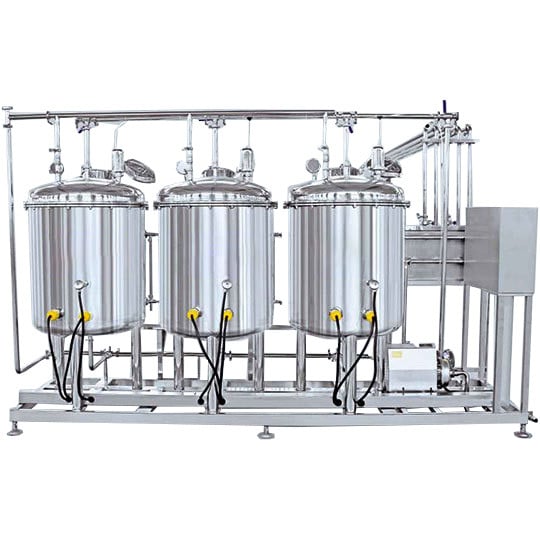
نظام التنظيف CIP، والذي يرمز إلى **Clean-in-Place**، هو حل تنظيف آلي ضروري للمصانع العاملة في مجال الألبان والأغذية. يتيح هذا المعدات المتطورة تنظيف وتعقيم خزانات المعالجة، الأنابيب، وداخل المعدات بشكل كامل دون الحاجة إلى تفكيكها. بالنسبة لمصانع إنتاج الزبادي، حيث النظافة ضرورية لسلامة المنتج وجودته، يمثل نظام CIP استثمارًا حيويًا يضمن معايير تعقيم ثابتة مع تقليل كبير في وقت العمالة واستهلاك محلول التنظيف مقارنة بطرق التنظيف اليدوية.
**التنظيف الآلي**: أقل من 30 دقيقة | **تقليل العمالة**: بنسبة 70-80% | **نظام بثلاث خزانات** | **بناء من SUS 304** | **كفاءة في استهلاك الطاقة**
”)
## ما هو نظام التنظيف CIP؟
: تقنية CIP (التنظيف في الموقع) هي طريقة لتنظيف الأسطح الداخلية للأنابيب، والأوعية، ومعدات المعالجة، والتوصيلات دون الحاجة إلى تفكيك أو نقل المعدات. تتداول هذه الطريقة الآلية حلول التنظيف عبر معدات الإنتاج باستخدام نفس المسارات التي يستخدمها المنتج، مما يضمن تنظيفًا شاملًا لجميع الأسطح التي تتلامس مع المنتج مع الحفاظ على سلامة معدات المعالجة والبيئة المحيطة.
نظام التنظيف في الموقع يحمّي سائل التنظيف أو الماء المخزن في خزانات مخصصة عبر مبادل حراري. عند تلبية متطلبات عملية التنظيف — أي عند الوصول إلى درجة الحرارة والتركيز الكيميائي الصحيحين — يتم تدوير الماء الحمضي، الماء القلوي، والماء الساخن المخزن في خزانات منفصلة بواسطة المضخات عبر شبكة أنابيب التنظيف بشكل متسلسل.
## لماذا يعتبر التنظيف عبر CIP ضروريًا في إنتاج الزبادي؟
تتكون مصانع معالجة الزبادي التجارية من العديد من الخزانات، الأنابيب، ومعدات المعالجة المعقدة. بعد كل دفعة إنتاج، تبقى بقايا الحليب والزبادي في أنابيب النقل والخزانات المعالجة. إذا لم تتم إزالتها بشكل كامل، فإنها تصبح بيئة خصبة للبكتيريا الضارة التي قد تلوث الدفعات الإنتاجية التالية.
### المقارنة الحاسمة بين التنظيف اليدوي والتلقائي عبر CIP
| عامل | التنظيف اليدوي | التنظيف الآلي عبر CIP | تحسين |
|——–|—————|—————|————-|
| زمن التنظيف | 2-4 ساعات | 20-40 دقيقة | أسرع بنسبة 80-85% |
| العمالة المطلوبة | 2-3 عمال | عامل واحد | تقليل بنسبة 70% |
| استهلاك المياه | 500-800 لتر/دورة | 200-400 لتر/دورة | تقليل بنسبة 50% |
| استهلاك المادة الكيميائية | متغير | جرعة دقيقة | تقليل بنسبة 30% |
| الاتساق | يعتمد على المشغل | 100% اتساق | جودة مضمونة |
| تآكل المعدات | التعامل القاسي | التحكم اللطيف | عمر أطول للمعدات |
## العلم وراء تنظيف CIP
فهم العلم يساعد على تحسين بروتوكولات التنظيف:
### أربعة معلمات حاسمة
| العامل | النطاق النموذجي | تأثير الانحراف |
|——–|—————|———————|
| نوع المادة الكيميائية | NaOH، HNO3، المنظفات | استخدام غير صحيح = سوء إزالة الأوساخ |
| **التركيز** | 0.5-2.0% | منخفض جدًا = غير فعال؛ مرتفع جدًا = هدر |
| **درجة الحرارة** | 60-80 درجة مئوية | منخفض جدًا = بطيء؛ مرتفع جدًا = تلف البروتين |
| **معدل التدفق** | 1.5-3.0 م/ث | منخفض جدًا = تغطية ضعيفة |
### التفاعلات الكيميائية
**تنظيف قلوي (NaOH)**:
– تصبن: يحول الدهون إلى صابون
– هيدوليز: يكسر البروتينات
– استحلاب: يعلق الدهون في الحلول
**التنظيف الحمضي (HNO3)**:
– إذابة الرواسب المعدنية (حجر الحليب)
– إزالة الصدأ وطبقات الأكسيد
– يوفر تأثير مضاد للبكتيريا
## الهيكل الرئيسي لنظام تنظيف آلات الزبادي
| المكون | الوظيفة | المواصفات الرئيسية |
|———–|———-|——————-|
| **خزان قلوي** | يخزن محلول NaOH | 200-1000 لتر |
| **خزان الحمض** | يخزن محلول حمض النيتريك | 200-1000 لتر |
| **خزان الماء الساخن** | يخزن مياه الشطف | 300-1500 لتر |
| **مبادل حراري** | يسخن الحلول | بخار أو كهربائي |
| **مضخة العملية** | تدوير الحلول | 2-5 كيلوواط، 1.5-3.0 م/ث |
| **نظام التحكم** | ي automate الدورة | PLC بشاشة لمس |
| **كرات الرش** | توزع الحلول | تغطية بزاوية 360 درجة |
### تكوينات النظام
| التكوين | الأفضل لـ |
|————–|———-|
| **نظام مقسم** | مناطق تنظيف متعددة |
| **نظام متكامل** | خط إنتاج واحد |
| **نظام متنقل** | معدات متعددة |

## عملية التنظيف: خطوة بخطوة
### دورة CIP الكاملة
| خطوة | مدة | درجة الحرارة | المادة الكيميائية | الغرض |
|——|———-|————-|———-|———|
| 1. الشطف المسبق | 3-5 دقائق | 40-50 درجة مئوية | لا شيء | إزالة الرواسب السائبة |
| 2. الغسل القلوي | 8-15 دقيقة | 65-80 درجة مئوية | 1-2% NaOH | إزالة الدهون والبروتينات |
| 3. الشطف الوسيط | 3-5 دقائق | 40-50 درجة مئوية | لا شيء | إزالة الرواسب القلوية |
| 4. الغسل الحمضي | 6-10 دقائق | 60-70 درجة مئوية | 0.5-1.5% حمض النيتريك HNO3 | إزالة المعادن/الترسبات |
| 5. الشطف النهائي | 3-5 دقائق | درجة حرارة الغرفة | لا شيء | إزالة آثار الحمض |
| 6. التعقيم | 2-3 دقائق | درجة حرارة الغرفة | 50-100 جزء في المليون كلور | تقليل الميكروبات |
| **الإجمالي** | **25-43 دقيقة** | | | |
## شولي مقابل المنافسين: مقارنة تقنية
| الميزة | Shuliy CIP | المنافس النموذجي |
|———|———–|——————-|
| سمك الخزان | SUS 304 (2.5 ملم) | 1.5-2 ملم |
| العزل | صوف صخري بسماكة 50 ملم | قياسي 25 ملم |
| وقت التسخين | 20-30 دقيقة | 40-60 دقيقة |
| كفاءة المضخة | IE3 ممتاز | IE2 قياسي |
| زمن الدورة | 25-35 دقيقة | 35-50 دقيقة |
| استهلاك المياه | 200-400 لتر/دورة | 400-600 لتر/دورة |
| الضمان | سنتان | سنة واحدة |
## تطبيقات أنظمة CIP
| الصناعة | التطبيقات |
|———-|————–|
| **صناعي** | إنتاج الزبادي، معالجة الحليب، مصانع الجبن |
| **مشروب** | عصير، صودا، بيرة، نبيذ |
| **طعام** | الصلصات، الحساء، الوجبات الجاهزة |
| **صناعي** | تصنيع المواد الفعالة للأدوية، الحلول المعقمة |
| **مستحضرات التجميل** | كريمات، لوشنات، صوابين سائلة |
## جدول الصيانة
### الفحوصات اليومية
– التحقق من مستويات الحلول
– فحص التسربات
– تأكيد قراءات درجة الحرارة
– ضمان التركيزات الكيميائية الصحيحة
### الفحص الأسبوعي
– فحص كرات الرش للتأكد من عدم الانسداد
– فحص الأختام والحشوات
– فحص أداء المضخات ومعدلات التدفق
### الصيانة الشهرية
– معايرة حساسات درجة الحرارة
– فحص وتنظيف خزانات الحلول
– فحص مضخات الجرعة الكيميائية
### خدمة ربع سنوية
– فحص شامل للنظام
– خدمة الصمامات
– فحوصات تركيب الأنابيب
– تنظيف شامل للخزان
## دليل استكشاف الأخطاء وإصلاحها
| المشكلة | السبب المحتمل | الحل |
|———|—————|———-|
| نتائج تنظيف ضعيفة | درجة حرارة منخفضة | فحص نظام التسخين، زيادة نقطة الضبط |
| رغوة | حلول ملوثة | تصريف واستبدال الحلول |
| المضخة لا تبني ضغطًا | تسرب هوائي، ختم مهترئ | فحص الأختام، تزويد المضخة بالهواء |
| تصريف غير كامل | أنابيب مسدودة، ميل غير كاف | إزالة الانسداد، تعديل الميل |
| رائحة المادة الكيميائية | حلول قديمة | استبدال حسب الجدول |
## تحليل العائد على الاستثمار
| العامل | التنظيف اليدوي | نظام CIP | التوفير السنوي |
|——–|—————-|————|—————-|
| تكلفة العمالة | 30,000 دولار/سنة | 6,000 دولار/سنة | 24,000 دولار |
| استهلاك المياه | 50,000 لتر/سنة | 25,000 لتر/سنة | 2,500 دولار |
| تكلفة المادة الكيميائية | 8,000 دولار/سنة | 5,600 دولار/سنة | 2,400 دولار |
| الوقت المفقود في الإنتاج | 400 ساعة/سنة | 100 ساعة/سنة | 300 ساعة |
| **إجمالي سنوي** | | | **28,900 دولار** |
استثمار المعدات: 15,000-40,000 دولار
فترة استرداد الاستثمار: 6-18 شهرًا
## المنتجات ذات الصلة
لحلول معالجة الألبان الكاملة:
– [**خط إنتاج الزبادي**](https://yogurt-machine.com/yogurt-production-line-yogurt-machine/) – نظام إنتاج كامل
– [**آلة تعقيم الحليب**](https://yogurt-machine.com/milk-pasteurizer-milk-pasteurization-machine/) – تتطلب تنظيف CIP منتظم
– [**صانع الزبادي المخمر**](https://yogurt-machine.com/commercial-yogurt-machine-yogurt-fermentation-maker/) – معدات التخمير
– [**آلة تعبئة الزبادي الأوتوماتيكية**](https://yogurt-machine.com/automatic-yogurt-filling-machine-packaging-machine/) – معدات التعبئة والتغليف
—
**علامات**: نظام تنظيف CIP، معدات تنظيف آلة الزبادي، نظام التنظيف في الموقع، معدات تنظيف الألبان
ما هو سعر الآلة التي أخطط لاستخدامها في خط معالجة عصير الأليو فيرا بسعة 1000 لتر الذي أحتاجه، شكرًا
ما هو سعر نظام التنظيف cip وسعة الحجم؟
شكرا لاستفسارك، سأتصل بك عبر البريد الإلكتروني قريبا، يرجى التحقق.
للحصول على المشورة بشأن كتالوج الأسعار الرسومية
مرحبًا، لقد استلمتها واتصلت بمدير المبيعات المحترف لدينا ليرسل لك تفاصيل الجهاز وسعره. انتبه إلى البريد الإلكتروني لـ Shuliy.