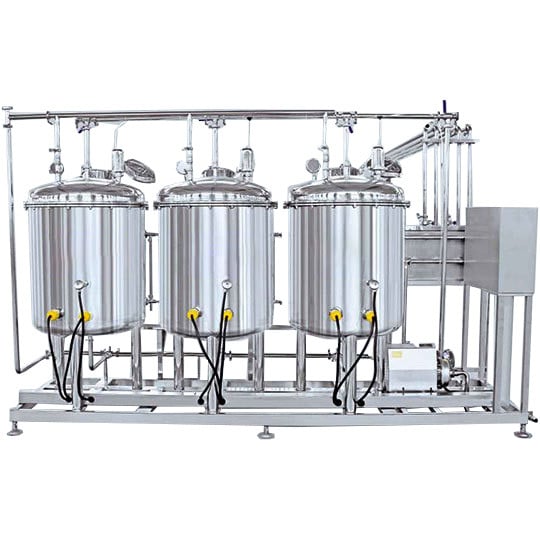
The CIP cleaning system, which stands for Clean-in-Place, is an essential automated cleaning solution for dairy and food processing facilities. This sophisticated equipment enables thorough cleaning and sanitation of processing tanks, pipelines, and equipment interiors without requiring disassembly. For yogurt production facilities, where hygiene is paramount to product safety and quality, the CIP system represents a critical investment that ensures consistent sanitation standards while dramatically reducing labor time and cleaning solution consumption compared to manual cleaning methods. The clean-in-place system has become the industry standard for modern food and beverage processing operations of all scales.
What is CIP Cleaning System?
CIP (Clean-in-Place) technology is a method of cleaning the interior surfaces of pipes, vessels, process equipment, and fittings without the need to dismantle or move the equipment. This automated approach circulates cleaning solutions through the production equipment using the same pathways as the product itself, ensuring thorough cleaning of all contact surfaces while maintaining the integrity of the processing equipment and surrounding environment.
The clean-in-place system heats cleaning liquid or water stored in designated tanks through a heat exchanger. When the cleaning process requirements are reached—meaning the correct temperature and chemical concentration—the acid water, alkaline water, and hot water stored in separate tanks are sequentially circulated by pumps through the cleaning pipeline network. This high-pressure circulation effectively cleans tanks, pipelines, and other processing equipment, achieving the safety and hygiene standards required for food and beverage production.

Why is CIP Cleaning Essential in Yogurt Production?
Commercial yogurt processing plants and fresh milk sterilization lines consist of numerous tanks, pipes, and complex processing equipment. After each batch production of yogurt, residual milk and yogurt remain in the transporting tubes and processing tanks. If these residues are not thoroughly removed, they become breeding grounds for harmful bacteria that can contaminate subsequent production batches, compromising product safety and shelf life.
Manual cleaning methods present significant challenges: disassembly and reassembly of tanks and tubes requires substantial time and labor, and the effectiveness of manual cleaning is difficult to standardize across different operators. Incomplete cleaning directly impacts yogurt taste and quality, potentially causing off-flavors, texture degradation, and safety concerns in finished products. The yogurt machine cleaning equipment provided by an automated CIP system eliminates these inconsistencies while dramatically reducing labor requirements.

Main Structure of the Yogurt Machines Cleaning System
The CIP cleaning system comprises several essential components that work together to achieve thorough, automated cleaning:
- Cleaning Liquid Storage Tanks: Typically three separate tanks holding acid solution, alkaline solution, and hot water (or clean water). Each tank is sized according to the volume of the system being cleaned.
- Acid-Base Adding Device: Precisely measures and adds concentrated acid and alkali to achieve the correct cleaning solution concentrations for effective sanitation.
- Heat Exchanger: Heats water and cleaning solutions to the required temperature, as cleaning effectiveness depends significantly on solution temperature.
- Process Pump and Return Pump: Circulates cleaning solutions through the system at appropriate flow rates to ensure all surfaces receive adequate contact with cleaning chemicals.
- Pipeline Network: Connects the CIP system to all equipment requiring cleaning, including tanks, pipes, valves, and processing vessels.
- Steam Valve Group: Controls steam supply for heating cleaning solutions to the required temperatures.
According to different cleaning requirements and system configurations, the CIP structure can be designed as single circuit, dual circuit, or multi-circuit configurations to accommodate various facility layouts and production requirements.

The Cleaning Process Explained
The standard cleaning sequence for most dairy applications follows this proven process:
- Pre-Rinse: Clean water (typically 40-50°C) circulates through the system to remove loose residues, milk solids, and gross contamination before the main cleaning cycle begins.
- Alkaline Wash: Sodium hydroxide (NaOH) solution at concentration of 1-2% and temperature of 60-80°C circulates through the system to saponify fats, remove proteins, and eliminate organic residues.
- Intermediate Rinse: Clean water flushes away loosened soil and alkaline residue before the acid step, preventing neutralization reactions that would reduce acid effectiveness.
- Acid Wash: Nitric acid or phosphoric acid solution at concentration of 0.5-1.5% and temperature of 60-70°C removes mineral deposits (scale), milk stone, and provides additional sanitization.
- 最終リンス: Clean water removes all traces of acid solution, leaving surfaces in a neutral condition safe for food contact.
- Sanitization: Optional final rinse with approved sanitizer ensures microbiological safety before production resumes.
Key Factors in Successful CIP Cleaning
The effectiveness of any CIP cleaning process depends on four critical parameters that must be properly controlled:
| 要因 | Description | 標準範囲 |
| Chemical Type | Cleaning agent composition | NaOH, HNO3, detergents |
| Concentration | Solution strength | 0.5-2.0% depending on agent |
| 温度 | Solution heat level | 60-80°C for most steps |
| Flow Rate | Circulation velocity | 1.5-3.0 m/s for turbulent flow |
In the automatic cleaning system, the metering and addition of concentrated acid and alkali, along with the temperature of cleaning liquids, are automatically controlled through sensors and programmable logic controllers. Operators simply set the cleaning program parameters, and the system executes the complete cleaning cycle automatically, ensuring consistent results every time while eliminating operator variability in cleaning effectiveness.
Advantages of CIP Cleaning System
- Thorough Cleaning Coverage: The primary function of the CIP system is to automatically clean all surfaces in contact with products. Cleaning objects include tank inner walls, pipeline interiors, liquid container walls, and all other liquid pathways that would be difficult or impossible to clean manually without disassembly.
- 耐久性のある構造: All tanks and pipes in the clean-in-place system are made of high-quality stainless steel, providing excellent durability, corrosion resistance, and wear resistance. This robust construction ensures long-term reliable operation even with frequent cleaning cycles using acidic and alkaline solutions.
- Improved Product Safety: The CIP cleaning system ensures consistent, reproducible cleaning results that meet food safety standards. This systematic approach reduces the risk of contamination and product recalls due to inadequate cleaning.
- Time and Labor Savings: Automated cleaning cycles complete in under 30 minutes compared to hours required for manual cleaning. This dramatic reduction in cleaning time increases actual production time, improving overall equipment effectiveness and facility productivity.
- Reduced Operating Costs: Precise chemical dosing and optimized water consumption result in significant savings on cleaning chemicals and water bills. Heat recovery options can further reduce energy costs.
- Operator Safety: Automated systems reduce operator exposure to cleaning chemicals and hot solutions, improving workplace safety while ensuring proper handling and disposal of cleaning agents.
Applications of CIP Systems
While particularly valuable for yogurt production, CIP cleaning systems are essential equipment across many food and beverage processing applications:
- Dairy Processing: Milk pasteurization plants, cheese making facilities, yogurt production lines, ice cream manufacturing, butter and cream processing
- Beverage Production: Juice processing, soda production, beer brewing, wine making, bottled water facilities
- Food Manufacturing: Sauce and condiment production, soup processing, ready-meal preparation, confectionery manufacturing
- Pharmaceutical: API manufacturing, vaccine production, sterile solution preparation
- Cosmetics: Cream and lotion production, shampoo manufacturing, liquid soap processing
Design Considerations for CIP Systems
When planning a CIP system for yogurt production, consider these important factors:
- System Sizing: Calculate cleaning solution tank sizes based on the total volume of equipment to be cleaned, including pipelines, tanks, and vessels. Include sufficient volume for complete circulation and proper coverage.
- Flow Rate Requirements: Ensure pumps provide sufficient flow to achieve turbulent flow conditions (typically 1.5-3.0 m/s velocity) throughout the system. Insufficient flow results in poor cleaning of remote areas and pipe dead legs.
- Temperature Control: Install accurate temperature sensors and heating systems capable of maintaining required temperatures throughout the cleaning cycle, even during cold weather conditions.
- Drainage: Proper slope and drainage connections ensure complete emptying of pipelines after cleaning. Standing water can lead to contamination and bacterial growth.
Maintenance of CIP Systems
Regular maintenance ensures optimal performance and extends equipment life:
- Daily Checks: Verify solution levels, check for leaks, confirm temperature readings are accurate, and ensure proper chemical concentrations
- 週次点検: Examine spray balls and nozzles for blockages, inspect seals and gaskets for wear, check pump performance and flow rates
- 月次メンテナンス: Calibrate temperature sensors, inspect and clean solution tanks, check and adjust chemical dosing pumps
- 四半期ごとのサービス: Comprehensive system inspection, valve servicing, pipe fitting checks, and thorough cleaning of solution tanks to remove accumulated sediment
Frequently Asked Questions
Q: How long does a typical CIP cleaning cycle take?
A: A complete CIP cleaning cycle typically takes 20-40 minutes depending on the complexity of the system, soil load, and specific cleaning program selected. This includes all rinse, wash, and sanitization steps. Compared to 2-4 hours required for manual cleaning, CIP dramatically improves production efficiency.
Q: What cleaning chemicals are used in CIP systems?
A: The most common chemicals are sodium hydroxide (NaOH) for alkaline cleaning to remove fats and proteins, and nitric acid (HNO3) or phosphoric acid for acid cleaning to remove mineral deposits. Specialized dairy CIP detergents may include additional ingredients like surfactants and chelating agents for enhanced cleaning performance.
Q: Can CIP systems be integrated with existing equipment?
A: Yes, most modern CIP systems can be designed to integrate with existing processing equipment. The key requirement is that all equipment to be cleaned has compatible connection points and appropriate spray devices or circulation capabilities. Our engineering team can design custom integration solutions for existing facilities.
Q: How do I determine the right size CIP system for my facility?
A: CIP system sizing depends on total volume of equipment to be cleaned, flow rate requirements, and cleaning time constraints. Our technical team can calculate optimal specifications based on your production line configuration, batch sizes, and throughput requirements.
関連製品
完全な乳製品処理ソリューションには、次の補完機器もご検討ください:
- ヨーグルト生産ライン – Complete production system that requires CIP cleaning for hygiene management
- 乳製品殺菌器 – Dairy equipment that requires regular CIP cleaning
- ヨーグルト発酵器 – Fermentation equipment cleaned using CIP systems
- 自動ヨーグルト充填機 – Packaging equipment maintained with CIP cleaning
私が必要とする容量1000リットルのアレオベラジュース加工ラインにこの機械を使用する予定の機械の価格はいくらですか、ありがとう
cip クリーニング システムとボリューム容量の価格はいくらですか
お問い合わせありがとうございます。すぐにメールでご連絡いたしますので、ご確認ください。
貴重なグラフィックのカタログを参照
やあ、彼は私と連絡を取るために、プロフェッショナルな環境を維持し、マキナの安全性を高めます。 Shuliy の電子音楽を視聴できます。