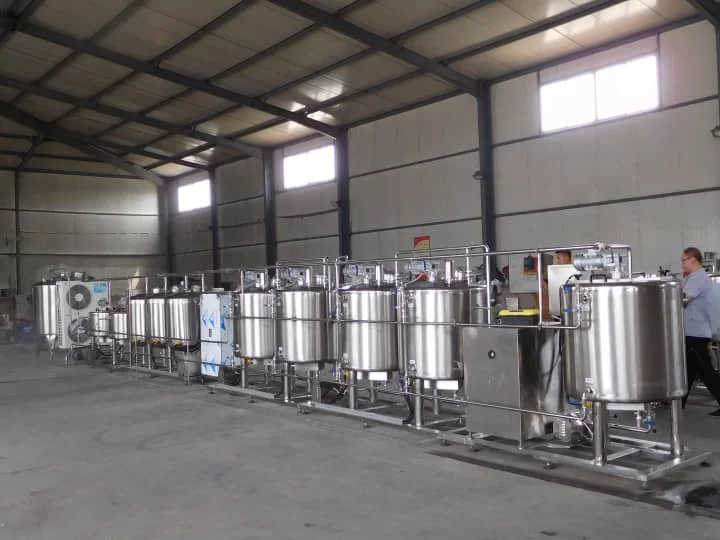
그릭 요거트는 전 세계 유제품 시장에서 가장 빠르게 성장하는 세그먼트 중 하나로, 많은 지역에서 연평균 성장률이 8%를 초과합니다. 그 농밀하고 크리미한 질감과 높은 단백질 함량으로 인해 프리미엄 제품으로 자리 잡았으며, 일반 요거트보다 40-60% 높은 가격에 판매됩니다. 이 포괄적 가이드는 스트레인 과정부터 장비 선택, 투자 계획까지 그릭 요거트 생산에 필요한 모든 정보를 제공합니다.
그릭 요거트는 주로 유청 제거와 고형물 농축을 위해 스트레인 과정을 거치며, 이는 일반 요거트와 차별화됩니다.
특징
일반 요거트
: 그릭 요거트
차이점
단백질 함량
3-5g/100g
8-12g/100g
2-3배 높음
당 함량
100g당 10-15g
4-6g/100g
50-60% 낮음
지방 함량
2-4g/100g
5-10g/100g
2-3배 높음
질감
부드럽고 붓기 없는
농후하고 크림 같은
스트레인 완료
수율
100% 우유
우유의 30-40%
유청 60-70% 제거
판매 가격
$1.50-2.50/L
$3.00-5.00/L
40-60% 프리미엄
스트레인 과정 설명
그릭 요거트 생산은 발효 후 추가 스트레인 단계가 필요합니다:
표준 발효: 일반 요거트 생산 과정 따름
스트레인: 유청을 여과 또는 원심분리로 제거
농도: 2-3배 고형물 농축
포장: 두꺼운 요거트를 용기에 채우기
그릭 요거트 생산 과정
전체 생산 작업 흐름
단계
공정
온도
지속 시간
핵심 설비
1. 우유 수령
품질 검사 및 냉각
4°C
30분
수용 탱크
2. 표준화
지방/단백질 함량 조정
40-50°C
20분
표준화 탱크
3. 균질화
지방 방울 분해
60-70°C
10분
균질기(200 bar)
4. 살균
열처리
90-95°C
10분
패스터라이저
5. 냉각
발효 온도로 낮추기
42-45°C
20분
판 냉각기
6. 접종
배양체 추가
42-45°C
10분
발효 탱크
7. 발효
배양 인큐베이션
42-45°C
5-7시간
발효 탱크
8. 냉각
발효 중단
4-6°C
30분
냉각 시스템
9. 스트레인
유청 제거
4-6°C
2-4시간
스트레인 시스템
10. 포장
채우기 및 밀봉
4-6°C
연속적
충전기
일반 요거트와의 주요 차이점
측면
일반 요거트
: 그릭 요거트
영향력
우유 필요량
1L 우유 = 1L 요거트
3-4L 우유 = 1L 요거트
원자재 비용 증가
발효 시간
: 6-8시간
5-7시간
약간 더 짧음
추가 단계
없음
스트레인(2-4시간)
추가 장비 필요
수율
95-100%
30-40%
배치당 출력 낮음
유통기한
14-21일
21-28일
수분이 적어 더 오래 지속
그릭 요거트 생산에 필요한 장비
핵심 장비 목록
장비
기능
사양
예상 비용
우유 수령 탱크
원유 저장
500-2000L, SUS 304
$5,000-12,000
표준화 탱크
우유 조성 조정
500-2000L, 교반기 포함
$6,000-15,000
균질화기
지방 방울 감소
200 bar 압력
$7,000-15,000
패스터라이저
열처리
90-95°C, 10분
$9,000-20,000
발효 탱크
배양 인큐베이션
온도 조절
$10,000-25,000
스트레인 시스템
유청 제거
원심 또는 막
$15,000-50,000
유청 수집 탱크
스트레인된 유청 수집
1000-3000L
$3,000-8,000
충전기
농후 요거트 포장
500-2000컵/hr
$7,000-20,000
CIP 청소 시스템
자동 세척
라인에 맞추기
$5,000-12,000
스트레인 시스템 옵션
스트레인 시스템은 그릭 요거트 생산의 핵심 차별화 요소입니다.
방법
설명
용량
비용
적합한 용도
원심 분리기
고속 회전으로 유청 분리
500-2000L/hr
$15,000-30,000
중대형 생산
막 여과
초여과막
200-1000L/hr
$20,000-50,000
프리미엄 품질, 일관성
천 가방 스트레인
전통 중력 스트레인
50-200L/hr
$2,000-5,000
소규모, 장인
디캔터 원심분리기
연속 분리
1000-5000L/시간
$30,000-80,000
산업 생산
스트레인 방법 비교
요인
원심분리기
막
천 가방
디캔터
수율
35-40%
30-35%
25-30%
35-45%
처리 시간
1-2시간
2-4시간
8-12시간
연속적
단백질 유지
90-95%
95-98%
85-90%
90-95%
작업 인력 필요
1인
1인
2-3명
1인
유지보수 비용
중간
높음
저전력
중간
제품 품질
우수
프리미엄
좋음
우수
그릭 요거트 생산을 위한 투자 비용
소규모(200L 일일 생산량)
장비
비용 범위 (USD)
참고 사항
우유 수신 탱크(600L)
$5,000-8,000
3배 우유량 필요
표준화 탱크
$6,000-10,000
지방/단백질 조정을 위해
600L 살균기
$9,000-14,000
그릭 스타일을 위한 높은 온도
균질화기
$7,000-10,000
200 bar 압력
600L 발효 탱크
$10,000-15,000
온도 조절
원심 분리기 필터
$15,000-25,000
핵심 장비
유청 수집 탱크
$3,000-5,000
부산물용
충전기
$7,000-12,000
농후 요거트용
CIP 시스템
$5,000-8,000
완전 세척
전체 장비
$67,000-107,000
시설 설치
$20,000-40,000
개조, 유틸리티
운전자본 (3개월)
$25,000-40,000
운영 비용
총 투자액
$112,000-187,000
중규모(500L 일일 생산량)
장비
비용 범위 (USD)
참고 사항
1500L 우유 수신 탱크
$8,000-12,000
3배 우유량 필요
표준화 탱크
$10,000-15,000
지방/단백질 조정을 위해
살균기(1500L)
$14,000-20,000
그릭 스타일을 위한 높은 온도
균질화기
$10,000-15,000
200 bar 압력
1500L 발효 탱크
$15,000-25,000
온도 조절
막 여과 시스템
$20,000-40,000
프리미엄 품질
유청 수집 탱크
$5,000-8,000
부산물용
충전기
$12,000-20,000
농후 요거트용
CIP 시스템
$8,000-12,000
완전 세척
전체 장비
$92,000-167,000
시설 설치
$40,000-80,000
개조, 유틸리티
운전자본 (3개월)
$40,000-60,000
운영 비용
총 투자액
$172,000-307,000
그릭 요거트와 일반 요거트: 수익성 비교
미터법
일반 요거트
: 그릭 요거트
차이점
원유 필요량
1L 제품당 1L
1L 제품당 3-4L
3-4배 더
생산 비용
$0.60-0.90/L
$1.20-1.80/L
2배 높음
판매 가격
$1.50-2.50/L
$3.00-5.00/L
2배 높음
총이익률
55-65%
55-65%
유사함
일일 수익(500L)
$750-1,250
$1,500-2,500
2배 높음
월별 순이익
$8,000-12,000
$15,000-25,000
2배 높음
투자 회수 기간
12-18개월
14-20개월
약간 더 오래
유청 부산물 수익
스트레인 과정은 상당한 유청을 생성하며, 이는 수익화할 수 있습니다.
유청 제품
시장 가치
가공 필요
수익 잠재력
액체 유청
$0.10-0.20/L
최소한의
$50-100/일 (500L 라인)
유청 단백질 농축액
$5-10/kg
건조, 여과
$200-500/일
유청 분말
$2-4/kg
스프레이 건조
$100-300/일
가축 사료
$0.05-0.10/L
최소한의
$25-50/일
그릭 요거트 품질 관리
핵심 품질 매개변수
파라미터
표준
테스트 방법
주파수
단백질 함량
8-12g/100g
Kjeldahl 방법
매 배치마다
지방 함량
5-10g/100g
Gerber 방법
매 배치마다
pH
4.3-4.6
pH 미터
매 배치마다
점도
8000-15000 cP
점도계
매 배치마다
총 고형분
15-20%
오븐 건조
매 배치마다
미생물 수
<10,000 CFU/g
균수
일일
일반적인 품질 문제와 해결책
문제
원인
해결책
너무 묽음
스트레인 부족
스트레인 시간 연장, 막 검사
너무 시큼함
과발효
발효 시간 단축, 빠른 냉각
거칠한 질감
과도한 균질화
압력 150-200 bar로 낮춤
유청 분리
불량 안정화
안정제(펙틴, 젤라틴) 추가
이상 풍미
오염
위생 상태 개선, 배양체 점검
그릭 요거트 시장 기회
성장하는 시장 세그먼트
세그먼트
성장률
가격 프리미엄
핵심 동인
플레인 그릭 요거트
연 6-8% 증가
40-50%
건강 의식
맛을 낸 그릭 요거트
연 8-10%
50-60%
맛 다양성
그릭 요거트 음료
연 10-12%
60-80%
편리성
유기농 그릭 요거트
연 12-15%
80-100%
프리미엄 포지셔닝
고단백 그릭 요거트
연 15-18%
100-120%
피트니스 시장
목표 소비자 프로필
소비자 유형
핵심 필요 사항
선호 제품
가격 민감도
건강 의식자
고단백, 저당
플레인, 유기농
저전력
피트니스 애호가
단백질 함량, 매크로
고단백, 맛을 낸
저-중간
가족
맛, 가치
맛을 낸 대형 포장
중간
프리미엄 구매자
품질, 브랜드
유기농, 장인
저전력
결론
그릭 요거트 생산은 55-65%의 총이익률과 강한 시장 수요로 뛰어난 수익 잠재력을 제공합니다. 핵심 투자 항목은 스트레인 시스템(15,000-80,000달러)으로, 이는 일반 요거트 생산과 차별화됩니다. 적절한 장비 선택과 품질 관리를 통해, 일일 500L 그릭 요거트 라인은 월 15,000-25,000달러의 순이익을 창출할 수 있습니다.
Contact Shuliy Machinery for customized Greek yogurt production line solutions. Our dairy processing experts will help you design the perfect equipment configuration based on your target capacity, product specifications, and budget.
그릭 요거트와 일반 요거트의 차이점은 무엇인가요?
그릭 요거트는 유청을 제거하기 위해 스트레인되어, 100g당 단백질 함량이 2-3배 높아집니다(8-12g vs 3-5g), 설탕은 50-60% 낮으며, 농밀하고 크리미한 질감을 갖습니다. 1리터의 그릭 요거트를 생산하려면 3-4리터의 우유가 필요하며, 일반 요거트는 1:1 비율입니다.
그릭 요거트 생산 장비 비용은 얼마인가요?
그릭 요거트 생산 장비 비용은 용량에 따라 67,000-167,000달러입니다. 핵심 추가 비용은 스트레인 시스템(15,000-80,000달러)으로, 이는 일반 요거트 생산에는 필요하지 않습니다. 총 투자 비용은 시설과 운전자본 포함하여 112,000-307,000달러입니다.
그릭 요거트 생산이 수익성이 있나요?
네, 그릭 요거트 생산은 매우 수익성이 높으며, 55-65%의 총이익률을 기록합니다. 500L 일일 라인은 월 15,000-25,000달러의 순이익을 창출할 수 있으며, 회수 기간은 14-20개월입니다. 프리미엄 가격(일반 요거트보다 40-60% 높음)이 원자재 비용 증가를 상쇄합니다.
그릭 요거트 생산에 필요한 장비는 무엇인가요?
필수 장비에는 우유 수신 탱크, 표준화 탱크, 균질기, 살균기, 발효 탱크, 스트레인 시스템(원심 또는 막), 유청 수집 탱크, 충전기, CIP 세척 시스템이 포함됩니다. 스트레인 시스템은 일반 요거트 생산과 차별화하는 핵심 요소입니다.