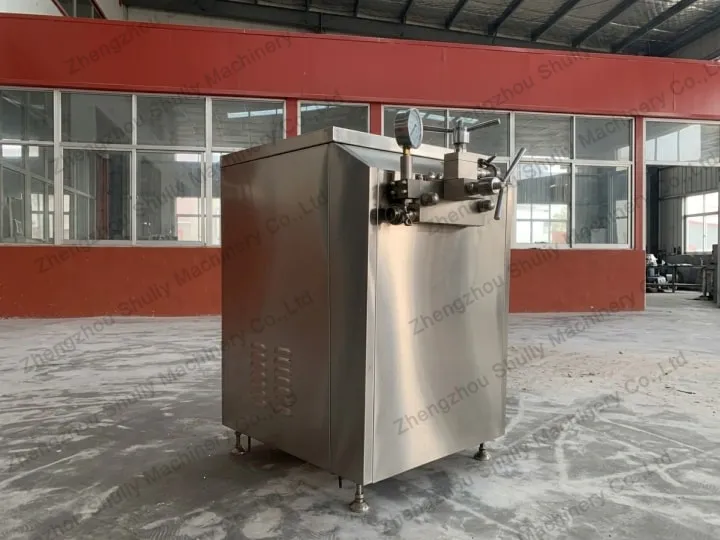
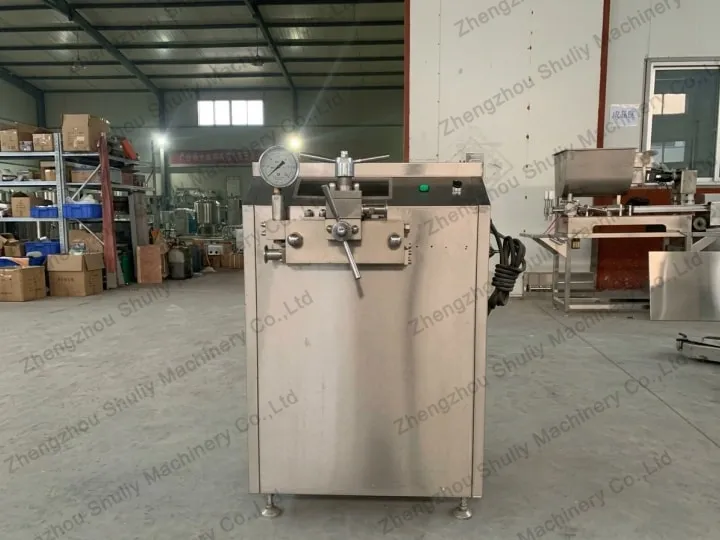
A yogurt homogenizing machine plays an important role in dairy processing by improving the uniformity of milk before fermentation. Its position in the production line affects the final yogurt texture, consistency, and stability.
Understanding where homogenization takes place helps dairy producers arrange their processing equipment and choose a suitable production method.
Main steps in yogurt production
A typical yogurt production process includes the following stages:
- Milk preparation: Raw milk is filtered and standardized to achieve the desired fat content and composition.
- Homogenization: The milk passes through a homogenizer, which reduces fat globule size and helps distribute fat more evenly throughout the milk.
- Heat treatment: The milk is heated to reduce unwanted microorganisms and improve the functional properties of milk proteins.
- Cooling and inoculation: The milk is cooled to the appropriate temperature before yogurt cultures are added.
- Fermentation: The cultures convert lactose into lactic acid, causing the milk to develop its characteristic acidity and texture.
- Cooling and packaging: Once the desired fermentation level is reached, the yogurt is cooled and prepared for packaging. The exact sequence depends on the type of yogurt being produced.
Why is homogenization usually performed before fermentation?
For many conventional stirred and set yogurt processes, homogenization takes place before fermentation, often before or in conjunction with the main heat-treatment stage.
During homogenization, milk is forced through a narrow passage under pressure. This mechanical action breaks large fat globules into smaller ones, helping create a more uniform milk mixture.
Homogenization also affects the interactions between milk fat and proteins. It can contribute to a smoother texture and reduce fat separation during storage.
However, a yogurt homogenizing machine alone does not determine the final yogurt quality. Milk composition, heating conditions, starter cultures, fermentation temperature, and cooling practices all play important roles.
Does every yogurt production line use same Process?
No. The equipment arrangement depends on the yogurt type and the manufacturer’s processing method.
For many traditional yogurt processes, the main homogenization step occurs before fermentation. Additional processing after fermentation should be selected according to the product’s texture and formulation requirements.
How to choose a yogurt homogenizing machine?
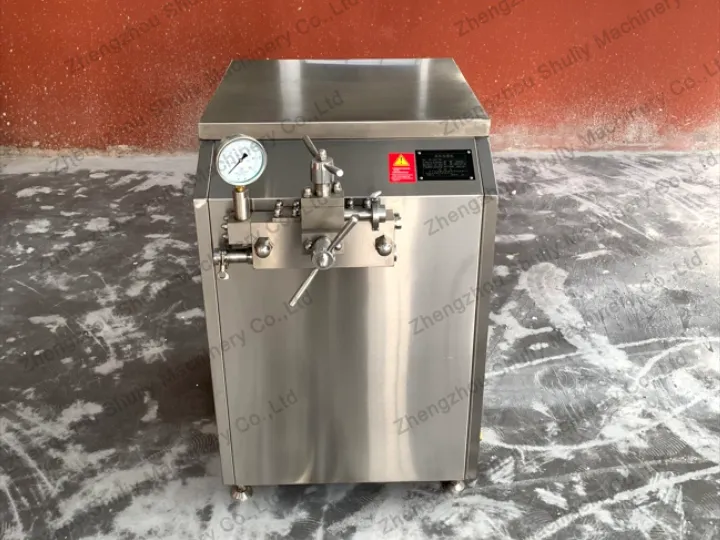
When selecting a yogurt homogenizer, manufacturers should consider more than the machine itself. The required processing capacity, milk composition, target product texture, operating pressure, and compatibility with other dairy equipment all influence the choice.
It is also important to confirm whether the machine will handle milk before fermentation or a finished yogurt product, as these applications may require different processing conditions and equipment configurations.
Contact us today for your yogurt production
A properly selected yogurt homogenizing machine can support consistent milk preparation and help manufacturers achieve their desired yogurt characteristics. The best configuration depends on the production process, product type, and processing requirements.
If you are planning a new yogurt production line or upgrading existing equipment, contact our team to discuss your application and find a suitable homogenization solution.