Por que a Manutenção de Equipamentos de Iogurte é Importante.
A manutenção adequada do equipamento de iogurte é fundamental para garantir qualidade consistente do produto, evitar quebras dispendiosas e prolongar a vida útil do equipamento. Equipamentos bem mantidos não só entregam produtos de iogurte superiores, mas também reduzem o tempo de inatividade e os custos operacionais. A manutenção regular previne contaminações, mantém desempenho consistente e garante conformidade com os padrões de segurança alimentar.
Sem a manutenção adequada, os equipamentos de produção de iogurte enfrentam problemas comuns, como crescimento bacteriano, desgaste mecânico e redução da eficiência. Este guia cobre práticas de manutenção abrangentes para todos os principais equipamentos na sua linha de produção de iogurte, desde a pasteurização até a embalagem.
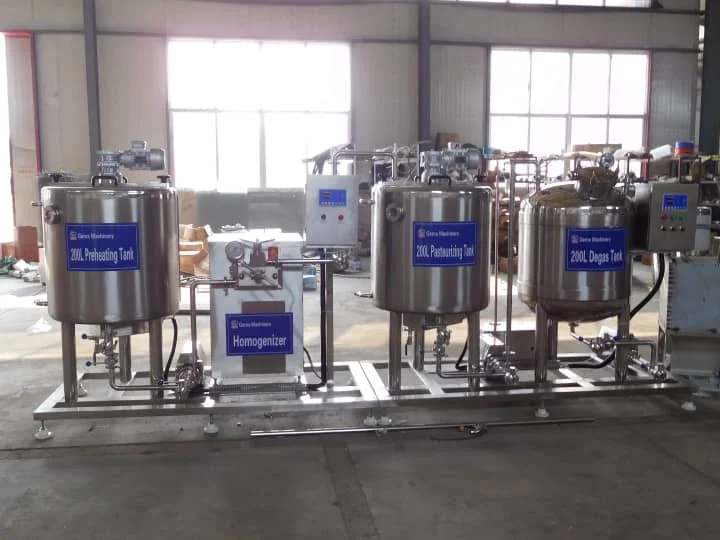
Visão geral dos equipamentos de produção de iogurte.
Uma linha de produção de iogurte completa consiste em várias peças de equipamento interligadas, cada uma exigindo protocolos de manutenção específicos.
- Pasteurizador de leiteGarante a segurança do leite por meio de tratamento térmico.
- Fabricante de fermentação de iogurteControla a temperatura e o tempo de fermentação.
- Máquina de Homogeneização de Laticínios.Refina partículas de leite para textura uniforme.
- Filtro Duplex de IogurteRemove impurezas do leite.
- Sistema de limpeza CIP de iogurteAutomatiza a limpeza do equipamento.
- Máquina automática de enchimento de iogurteEmbalagem de iogurte em recipientes.
- Linha de produção de iogurteIntegra todos os equipamentos para operação contínua.
- Máquina de Ordenha de Vacas.Recolhe o leite cru para processamento.
Cada equipamento possui requisitos de manutenção específicos, baseados na sua função, materiais e exposição aos produtos lácteos.
Procedimentos de Limpeza Diária.
A limpeza diária é a base de uma manutenção eficaz do equipamento de iogurte. Esses procedimentos devem ser realizados após cada ciclo de produção para evitar crescimento bacteriano e acúmulo de resíduos do produto.
Etapas de Limpeza para Todos os Equipamentos.
- Enxágue com água morna.Remova resíduos de produto solto com água a 40-50°C.
- Aplique solução detergente.Utilize detergente alcalino de grau alimentício (pH 11-12) a 60-70°C.
- Esfregue as superfícies de contato.Use escovas macias para áreas de difícil acesso.
- Enxágue Minucioso.Remova todo o detergente com água limpa.
- Desinfete as superfícies.Aplique sanitizante aprovado (à base de iodo ou quaternário de amônio).
- Enxágue final.Remova resíduos de sanitizante com água potável.
- Drenar e Secar.Certifique-se de que todo o equipamento esteja completamente drenado.
Para equipamentos com sistemas CIP, siga o protocolo de ciclo de limpeza automatizado. Monitore temperaturas de limpeza e concentrações químicas para garantir eficácia.
Lista de verificação de limpeza diária
| Tarefa | Equipamento | Método | Tempo necessário |
|---|---|---|---|
| Pré-enxaguamento | Todos os tanques, tubagens | Água morna 40-50°C | 15-20 min |
| Lavagem cáustica | Equipamento de processamento | 2% NaOH a 70-80°C | 20-30 min |
| Enxaguamento intermédio | Todo o equipamento | Água limpa | 10-15 min |
| Lavagem ácida | Trocadores de calor | 1% HNO3 a 60-70°C | 15-20 min |
| Enxaguamento final | Todo o equipamento | Água potável | 10-15 min |
| Sanitização | Superfícies de contacto do produto | Desinfetante aprovado | 10 min |
Lista de Verificação de Inspeção Semanal.
Inspeções semanais ajudam a identificar problemas potenciais antes que se tornem problemas maiores. Use esta lista de verificação abrangente para manter a condição ideal do equipamento.
| Equipamento | Item de Inspeção. | Padrão | Ação Necessária. |
|---|---|---|---|
| Pasteurizador de leite | Juntas e vedações. | Sem rachaduras ou deformações. | Substitua se estiver danificado. |
| Fabricante de fermentação de iogurte | Sensores de temperatura. | Precisão de ±0,5°C. | Calibre se detectar deriva. |
| Homogeneizador | Níveis de óleo. | Entre marcas mínimas/máximas. | Adicione óleo ao nível correto. |
| Filtro. | Elementos do filtro. | Sem entupimentos ou danos. | Limpe ou substitua conforme necessário. |
| Máquina de Enchimento | Mecanismos de vedação. | Sem desgaste ou desalinhamento. | Ajuste ou substitua vedações. |
| Sistema CIP. | Bombas e válvulas. | Sem vazamentos ou ruídos incomuns. | Realize manutenção se necessário. |
Documente todas as inspeções semanais com datas, descobertas e ações corretivas tomadas. Este registro ajuda a acompanhar tendências do estado do equipamento e a eficácia da manutenção.
Tarefas de Manutenção Mensais.
Manutenção mensal vai além da limpeza diária para abordar componentes mecânicos e desempenho do sistema. Essas tarefas garantem confiabilidade a longo prazo.
Componentes Mecânicos.
- Lubrificação.Aplique lubrificantes de grau alimentício em rolamentos e partes móveis.
- Inspeção de Correias.Verifique a tensão e o alinhamento, substitua correias gastas.
- Manutenção do Motor.Inspecione conexões elétricas e carcaça do motor.
- Óleo da caixa de engrenagens.Verifique os níveis e troque de acordo com o cronograma do fabricante.
- Análise de Vibração.Monitore padrões de vibração incomuns.
Verificação de Desempenho.
- Calibração de temperatura.Verifique a precisão do sensor em toda a faixa de operação.
- Testes de Pressão.Verifique vazamentos em sistemas de alta pressão.
- Verificação da Taxa de Fluxo.Confirme que a vazão atende às especificações.
- Integridade do selo.Teste as vedações sob condições de operação.
- Eficácia da Limpeza.Verifique se a limpeza CIP atinge os padrões exigidos.
Manutenção Trimestral e Anual.
Períodos de manutenção estendidos focam em revisões completas do sistema e substituição de componentes. Essas atividades geralmente requerem paradas planejadas.
Tarefas Trimestrais.
| Tarefa | Equipamento | Duração | Notas |
|---|---|---|---|
| Desmontagem completa | Todos os tanques, bombas | 4-8 horas | Inspecionar componentes internos |
| Substituição de componentes | Juntas, selos, peças de desgaste | 2-4 horas | Substituir conforme cronograma |
| Inspeção elétrica | Painéis de controlo, cablagem | 2-3 horas | Verificar conexões, isolamento |
| Atualizações de software | Sistemas PLC, HMI | 1-2 horas | Fazer backup antes de atualizar |
| Testes de desempenho | Todos os sistemas | 4-6 horas | Validação completa do sistema |
Revisão Anual
| Tarefa | Equipamento | Duração | Notas |
|---|---|---|---|
| Substituição de componentes principais | Bombas, motores, peças críticas | 1-3 dias | Planear o cronograma de produção |
| Atualizações do sistema | Melhorias de eficiência | 1-2 dias | Avaliar o ROI antes da atualização |
| Inspeção abrangente | Avaliação completa do sistema | 1-2 dias | Documentar todas as descobertas |
| Atualização de formação | Atualização do operador | 1 dia | Rever procedimentos, segurança |
| Revisão do cronograma | Programa de manutenção | 2-4 horas | Ajustar com base nos dados |
Peças de desgaste comum e cronograma de substituição.
Saber quando substituir peças de desgaste comum evita falhas inesperadas e mantém a qualidade consistente do produto. Siga este cronograma de substituição com base nas horas de operação.
| Componente. | Intervalo de Substituição. | Indicadores de Substituição. | Custo estimado |
|---|---|---|---|
| Selos e juntas. | A cada 6 meses ou 2000 horas. | Fissuras, endurecimento, vazamentos. | $50-200 por conjunto |
| Filtros. | De mensal a trimestral. | Aumento na queda de pressão, fluxo reduzido. | $100-500 por conjunto |
| Rolamentos. | Anualmente ou a cada 4000 horas. | Ruído incomum, vibração, calor. | $100-500 cada |
| Correias. | A cada 6-12 meses. | Fissuras, fraying, escorregamento. | $50-200 cada |
| Anéis de vedação. | A cada 3-6 meses. | Deformação por compressão, fissuras. | $10-50 por conjunto |
| Assentos de válvula. | Anualmente ou a cada 3000 horas. | Vazamento, erosão. | $100-300 cada |
| Sensores de temperatura | A cada 2 anos | Desvio de calibração, resposta lenta | $200-500 cada |
| Elementos de aquecimento | A cada 3-5 anos | Redução da eficiência de aquecimento | $500-2000 cada |
Mantenha inventário de peças de reposição críticas para minimizar o tempo de inatividade durante reparos de emergência. Considere compras em grande quantidade para economia de custos.
Inventário de peças sobressalentes recomendadas
| Categoria de Peça | Stock mínimo | Investimento estimado |
|---|---|---|
| Selos e juntas | 2 conjuntos por tipo de equipamento | $500-1,500 |
| Sensores de temperatura. | 2-3 unidades | $400-1,500 |
| Elementos do filtro. | 5-10 unidades | $200-1,000 |
| O-rings (sortidos) | 50-100 peças | $100-300 |
| Correias (sortidas) | 2-3 conjuntos | $200-600 |
| Investimento total em peças sobressalentes | $1,400-4,900 |
Registro de Manutenção.
A manutenção eficaz do equipamento de iogurte requer registro completo. Documente todas as atividades de manutenção para acompanhar tendências de desempenho e otimizar cronogramas.
Registros Essenciais.
- Registro de Manutenção.Data, atividade, operador, descobertas.
- Substituição de Peças.Componente, número de série, data de instalação.
- Dados de Desempenho.Temperaturas, pressões, taxas de fluxo.
- Análise de Falhas.Causa raiz, ação corretiva.
- Acompanhamento de Custos.Custos de mão de obra, peças e tempo de inatividade.
Equipamentos modernos frequentemente incluem capacidades de registro digital que rastreiam automaticamente os parâmetros de desempenho e os cronogramas de manutenção.
Estimativa de custos de manutenção
Compreender os custos de manutenção ajuda no planeamento orçamental e na análise da eficiência operacional.
Custo anual de manutenção por tipo de equipamento
| Equipamento | Custo anual de manutenção | Percentagem do valor do equipamento |
|---|---|---|
| Pasteurizador de leite | $2,000-5,000 | 3-5% |
| Tanque de Fermentação | $1,500-3,500 | 2-4% |
| Homogeneizador | $2,500-6,000 | 4-6% |
| Máquina de Enchimento | $3,000-7,000 | 4-7% |
| Sistema CIP. | $1,500-3,000 | 3-5% |
| Total (linha de 500L) | $10,500-24,500 | 3-5% do investimento total |
Estratégias de manutenção que economizam custos
| Estratégia | Economias anuais | Custo de implementação |
|---|---|---|
| Programa de manutenção preventiva | Redução de 20-30% nas reparações | $2.000-5.000 configuração |
| Formação da equipa | 15-25% menos erros do operador | $1,000-3,000 |
| Inventário de peças sobressalentes | 40-60% menos tempo de inatividade | $1.400-4.900 instalação inicial |
| Monitorização preditiva | 25-35% menos falhas | $3.000-8.000 sistema |
Considerações de Segurança Durante a Manutenção.
A segurança deve ser sempre a prioridade máxima durante as atividades de manutenção. Siga estas diretrizes para proteger o pessoal e os equipamentos.
- Lockout/Tagout.Desconecte as fontes de energia antes da manutenção.
- Equipamento de Proteção Pessoal.Use equipamento de proteção pessoal adequado.
- Segurança Química.Manuseie detergentes e sanitizantes corretamente.
- Proteção de Superfície Quente.Permita que o equipamento esfrie antes de manusear.
- Segurança Elétrica.Use ferramentas e procedimentos adequados.
Treine todo o pessoal de manutenção nos procedimentos de segurança e protocolos de resposta a emergências.
Resolução de Problemas Comuns de Manutenção.
Identificar e resolver rapidamente problemas de manutenção minimiza o tempo de inatividade e perdas na produção.
| Problema | Causa Possível. | Solução |
|---|---|---|
| Vibração excessiva | Montagem solta, rolamentos desgastados. | Aperte parafusos, substitua rolamentos. |
| Resultados de limpeza insatisfatórios | Baixa temperatura, detergente insuficiente. | Verifique os parâmetros do CIP. |
| Vazamento de vedações. | Sobrecarga de compressão, material incorreto. | Instale vedações corretas. |
| Deriva de temperatura. | Sensores sujos, deriva de calibração. | Limpe, recalibre. |
Consulte os manuais dos equipamentos para procedimentos específicos de resolução de problemas e entre em contato com os fabricantes para questões complexas.
Conclusão e Melhores Práticas.
Implementar um programa abrangente de manutenção do equipamento de iogurte garante qualidade consistente, maximiza a vida útil do equipamento e minimiza o tempo de inatividade inesperado. O sucesso depende de estabelecer cronogramas regulares, documentar todas as atividades e investir em treinamento adequado para o pessoal de manutenção.
Lembre-se de que a manutenção é um investimento na sua capacidade de produção e na qualidade do produto. Atenção regular ao cuidado do equipamento traz dividendos na redução de custos operacionais e na confiabilidade aprimorada. Para melhores resultados, considere fazer parceria com fabricantes de equipamentos experientes que possam fornecer suporte contínuo e treinamento.
Para soluções completas de produção de iogurte e suporte de manutenção especializado, explore nossa linha de equipamentos.
- Linha de produção de iogurte – Soluções integradas com suporte de manutenção abrangente.
- Máquina de pasteurização de leite – Sistemas avançados com protocolos de manutenção simplificados.
- Fabricante de fermentação de iogurte – Equipamentos de precisão com recursos de manutenção preditiva.
- Máquina automática de enchimento de iogurte – Design higiênico para fácil limpeza e manutenção.
- Sistema de limpeza CIP de iogurte – Soluções de limpeza automatizadas para simplificar rotinas de manutenção.
Com que frequência devo limpar o equipamento de produção de iogurte?
Limpar todas as superfícies de contacto do produto após cada ciclo de produção usando sistemas CIP (Clean-in-Place) ou procedimentos manuais de limpeza. A limpeza diária inclui pré-enxaguamento, lavagem cáustica, lavagem ácida e sanitização. Inspeções semanais e limpezas profundas mensais garantem higiene ótima.
Qual é o custo anual de manutenção do equipamento de iogurte?
Os custos anuais de manutenção geralmente variam entre 3-5% do valor total do equipamento. Para uma linha de produção de 500L, espere entre $10.500-24.500 anualmente, incluindo peças, mão de obra e atividades preventivas de manutenção.
Que peças sobressalentes devo manter em stock?
Peças sobressalentes essenciais incluem selos e juntas (2 conjuntos por equipamento), sensores de temperatura (2-3 unidades), elementos filtrantes (5-10 unidades), O-rings (50-100 peças) e correias (2-3 conjuntos). O investimento total em peças sobressalentes varia entre $1.400-4.900.
Como posso reduzir os custos de manutenção do equipamento de iogurte?
Implementar um programa de manutenção preventiva (economiza 20-30% nas reparações), treinar adequadamente a equipa (reduz erros do operador em 15-25%), manter inventário de peças sobressalentes (reduz o tempo de inatividade em 40-60%) e usar sistemas de monitorização preditiva (previne 25-35% das falhas).